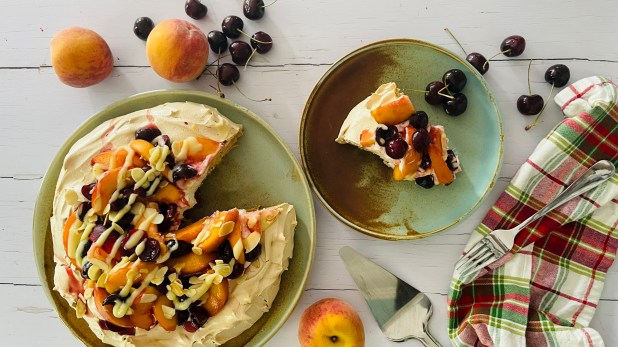
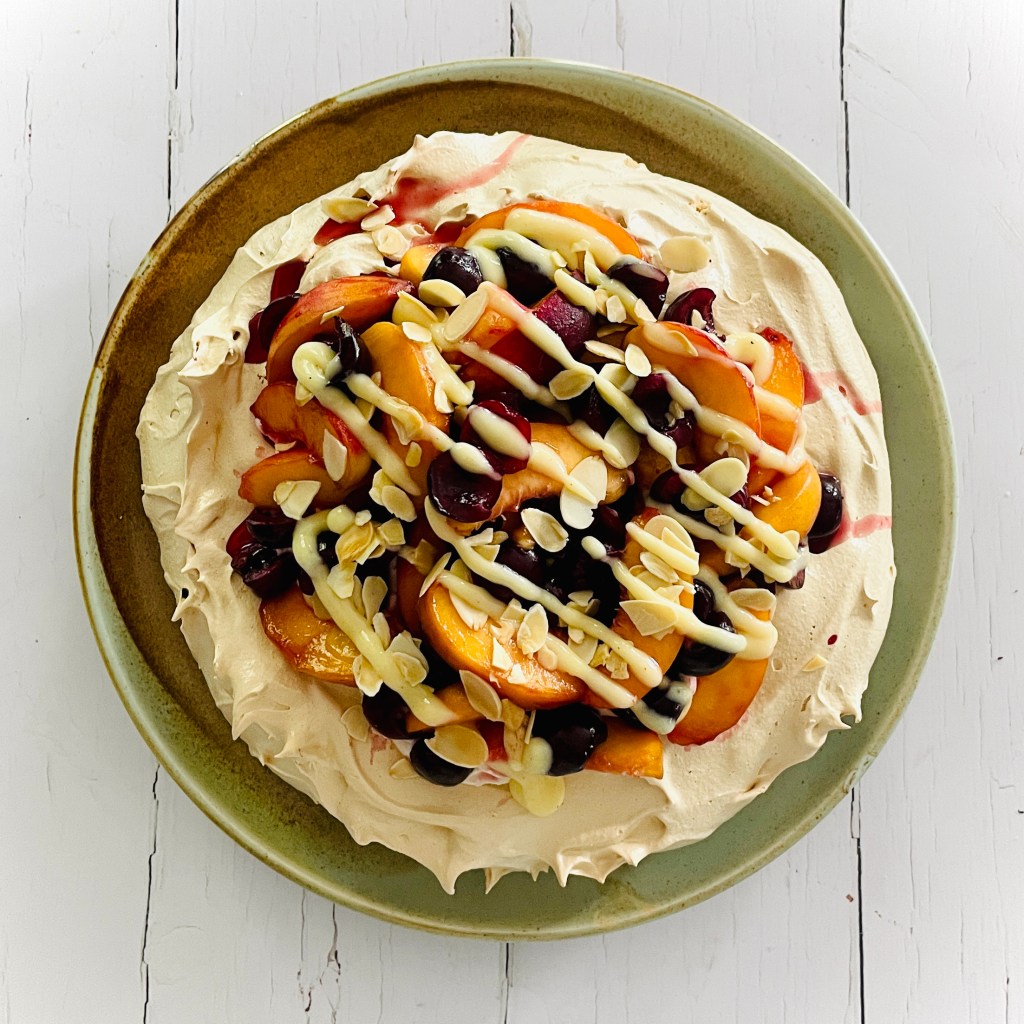
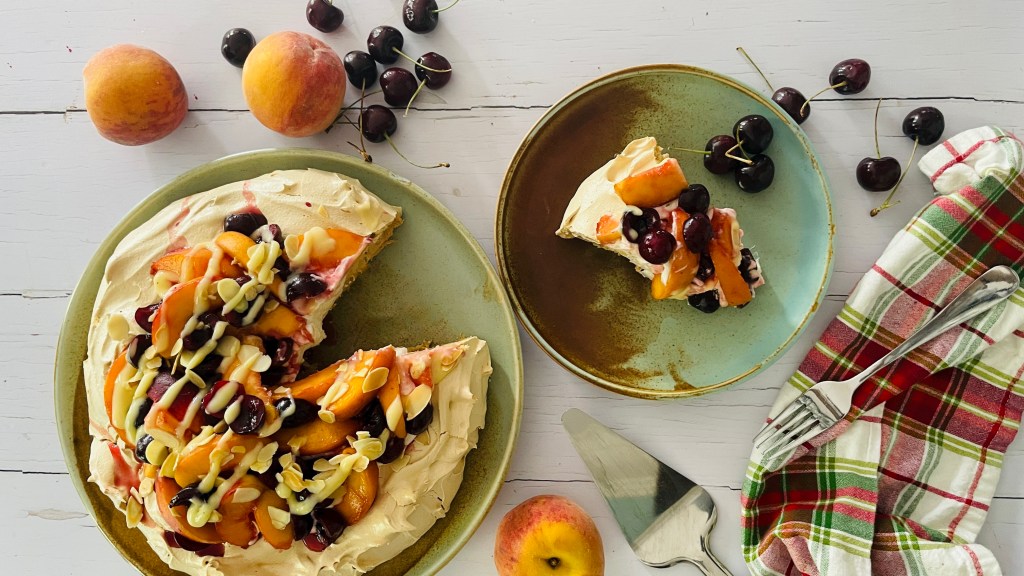
Cherry & Peach Pavlova w/ Tonka Bean Lemon Curd

Makes 9 inch pavlova, yields 8-10 servings

Ingredients

Pavlova

  • 3 large egg whites
  • ½ cup fine sugar
  • ½ cup dark brown sugar
  • ¼ tsp cream of tartar, or ½ tsp lemon juice or vinegar
  • 1/8 teaspoon salt
  • 2oz dark chocolate, chopped
  • 1 cup whipping cream
  • 1 ½ cups mascarpone
  • 3 ripe peaches, sliced
  • ½ lb cherries, halved and pitted
  • ¼ cup sugar
  • 1 Tablespoon rum
  • Toasted, flaked almonds (optional)

Tonka Bean Lemon Curd

  • 5 unwaxed lemons
  • 1 cup white sugar
  • 1 medium Tonka bean (1 inch), grated using a micro-plane
  • 3 whole eggs and 3 yolks, room temperature
  • 1/8 teaspoon salt
  • 7 Tablespoons butter, cubed, softened to room temperature
Method

Pavlova

  1. Preheat your oven to 250°F. Cover a large baking tray with baking parchment and trace a circle, about 9-10 inches in diameter, on to the paper. Turn the paper over so the drawn-on side is facing down but still visible
  2. In a clean, dry bowl of a stand mixer, using whisk attachment, whisk the egg whites until frothy, then add the cream of tartar and whip to soft peaks. Reduce the speed to medium-low and with the whisk continuously running, add in the salt and the sugars a spoonful at a time, until thick and satiny
  3. Spread the meringue inside the drawn circle, creating a nest by making the sides a little higher than the centre. Place in the oven and bake for 3 hours, then switch off the oven but leave the meringue inside until completely cool: this will take about 2 hours. Once cool, remove from the oven and set aside
  4. Place the chocolate into a small heatproof bowl and set it over a small saucepan of simmering water, making sure the base of the bowl is not touching the water. Stir occasionally until melted. Cool slightly, then brush the chocolate inside the meringue nest, leaving the top and sides bare. Do this gently, as the meringue is fairly delicate. Leave to set for about 2 hours
  5. Place the cream and mascarpone in a large bowl and whisk for about 1 minute, until stiff peaks form. Be careful not to over-whisk, If the mixture begins to split use a spatula to fold a little more cream into the mix to bring it back together. Refrigerate until needed
  6. In a bowl combine the peach slices, cherries, sugar and brandy. Leave to macerate on the counter while you prepare the curd

Tonka Bean Lemon Curd

  1. Zest three of the lemons into a bowl with the sugar and grated tonka bean. Rub together with your fingertips to release the oils, then squeeze enough the lemons to give 1 cup juice
  2. Whisk the eggs into the sugar followed by the lemon juice, a little at a time, until fully incorporated
  3. Put in a heavy-based pan over a low heat and stir continuously with a rubber whisk or wooden spoon until thickened- which should take about 7 minutes. Strain into a medium bowl to remove any lumps or debris
  4. Whilst gently whisking, start dropping in the butter, a  tablespoon at a time, beating well at each addition until incorporated before adding in the next. When all the butter has been added continue beating until smooth
  5. Cover with cling wrap and allow to cool fully in the fridge before use

To assemble

  1. Carefully spoon the cream/ mascarpone mixture into the centre of the meringue. Using a teaspoon, place dollops of the tonka bean lemon curd onto the cream and swirl using a knife or chopstick.
  2. Top with the macerated fruit, drained of liquor, and pipe drizzles of additional curd over the fruit
  3. Sprinkle with a few toasted, flaked almonds for a finishing touch and serve immediately

Pear & Almond Skillet Cake

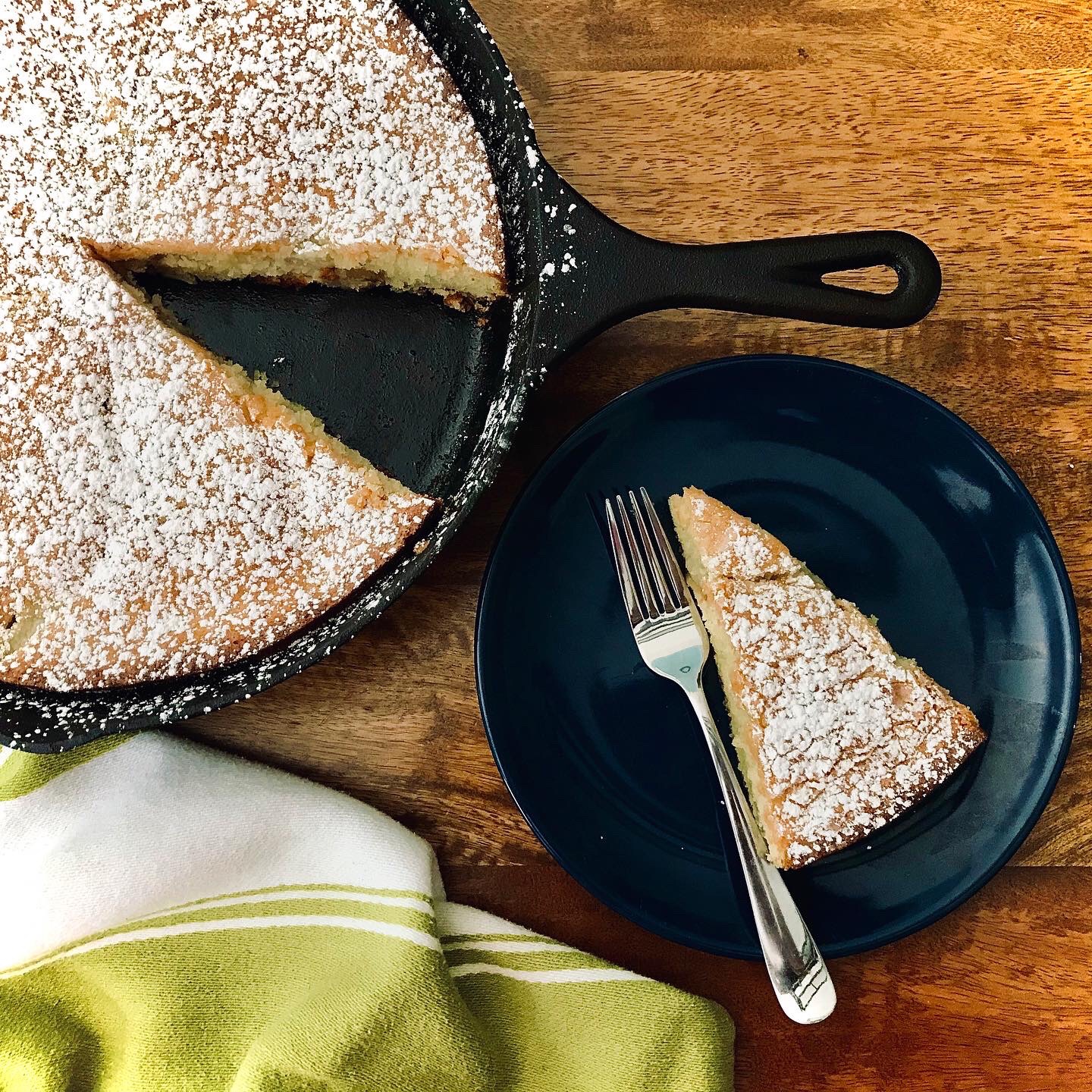
img_8208

Almonds are a favorite of mine, no matter what the form. Whether it’s the sweet grainy Niederegger of Lubeck; soft indulgent amaretti of Italy or the crisp, salt sprinkled Grecian bar treats- I’m in. I get they can be divisive. Not everyone can take to the vaguely chemical woodiness of the nuts but whatever the form I remain a fan.

The lure of the almond nut has been such throughout time that people have even braved the  high levels of  hydrocyanic acid (HCN) of the wild, bitter almond to partake of it. Eating 50, or less, of the wild nut could potentially kill an adult with cyanide poisoning. Yet such was the allure of the nut that there are recipes from as far back as the 4th century as to how to neutralize the nutty nastiness within. St. Basil’s Hexaemeron, a Christian text from around the fourth century, contains the following guidance:

“Pierce an almond tree in the trunk near its roots, stick a fat plug of pine into its center and its almond seeds will undergo a remarkable change.”

It would seem that the introduction of a foreign botanical sample triggers a metabolic reaction which neutralizes the trees natural HCN production. I can’t testify to the effectiveness of this trick so in the words of all good PBS science programs- please don’t try this at home. But fear not folks,  thanks to a genetic mutation thousands of years ago, modern domesticated sweet almonds are delicious and safe to eat. Unless consumed in massive quantities wherein constipation; Vitamin E overdose and weight gain (to name a few) might result. Everything in moderation as they say! Enough serious talk- you came here to bake (or accidentally got redirected here whilst researching Michael Keaton’s back catalogue).

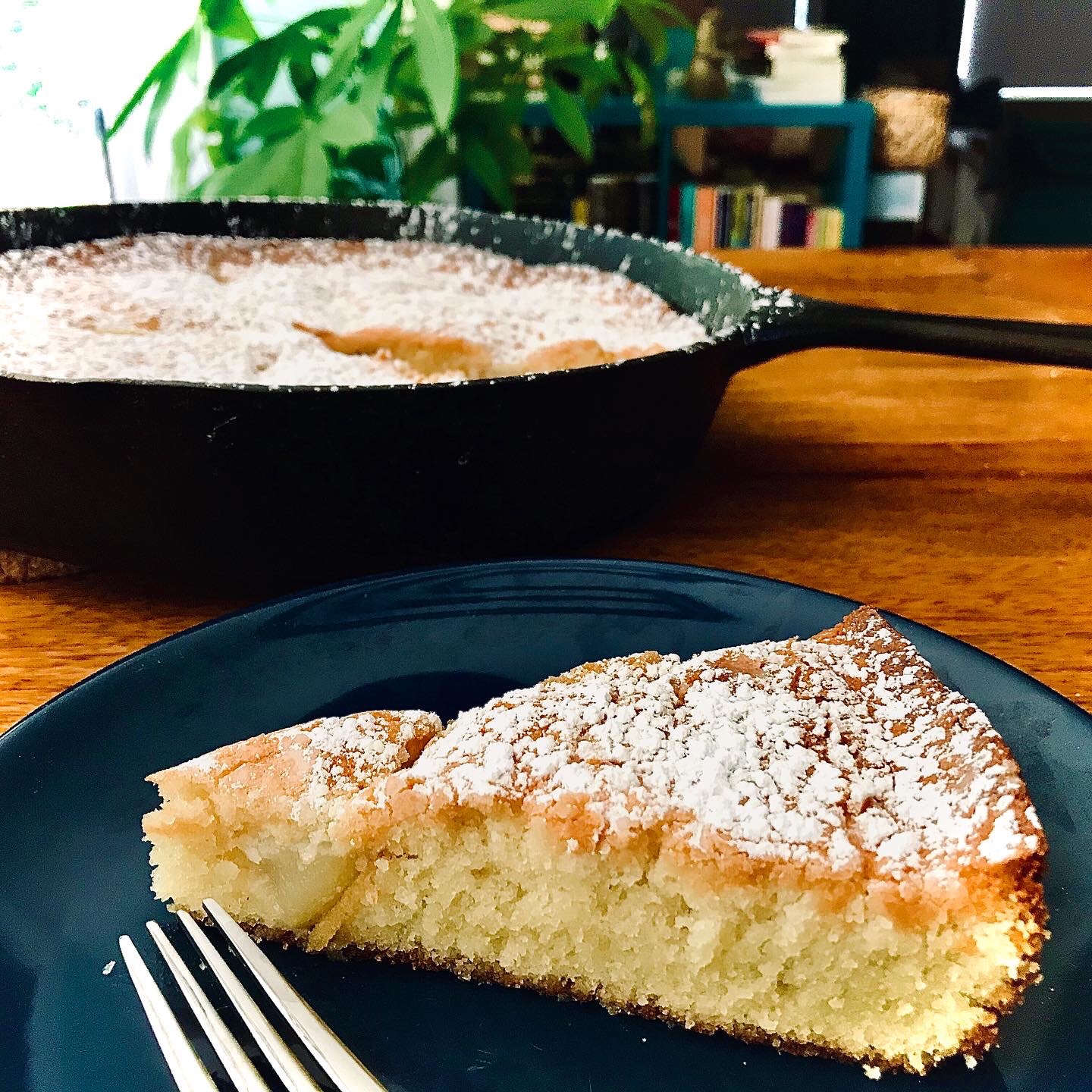
In my view almonds and pears are one of those quintessentially ideal pairings for baking with. Maybe it’s because they both conjure up images of lush, bacchanal orchard woodlands in my head? Or maybe it’s some other more exacting culinary scientific reasoning unbeknownst to me. As it is, this time of year with bumper pear crops just begs for some autumnal-tinged goods to be baked in the kitchen. I love this recipe as it’s very  much a no-fuss, rustic as you come affair. Cooking it in a skillet means no tin, springform or otherwise, to faff around with and presentation is as easy as pie (or should that be “cake” here? If you’re serving it warm why not go the whole way and slide a dollop of ice cream next to it on the plate? I can whole-heartedly recommend a French vanilla morphing into ribbons of silky, creaminess aside the fragrant cake.

I will hold my hands up and admit this – I also use the simple icing sugar dusting to hide the lack of my Instagram worthy pear pinwheel finish to the top of the cake. Of all the times I’ve made this cake I’ve only maneged the fluke of getting the pears to bake atop the surface twice. More often than not the pears sink that little bit and the batter rises that little bit so the pear slices get engulfed in the finish cake with morsels subtly peaking out here and there. Not that this is a bad thing I suppose? It could be argued that this adds an extra layer of interest with unexpected bites of fruitness throughout the cake. My point is don’t beat yourself up too much about not having the “pear wheel” on top or how it looks- this will taste seriously good anyway!

Ingredients

  • 1 cup and 2 Tbspns (separated) salted butter, softened
  • 1 1/2 cups fine sugar
  • 3 large eggs
  • 1 cup ground almonds
  • 1 cup AP flour
  • 1/4 tspn kosher salt
  • 1 Tbspn ground ginger
  • 1/3 cup milk
  • 1/2 teaspoon vanilla extract
  • 1/2 teaspoon almond extract
  • 2 medium Bosc pears, cored and sliced into 8 vertically
  • Icing sugar, to dust

bc40b2ec-f5bb-4808-86ba-b3573818a3d3

Method

  1. Preheat oven to 350°F, and place a 10″ cast iron skillet in to heat through
  2. In the bowl of a stand mixer fitted with the paddle attachment, beat butter and sugar at medium speed until pale and fluffy, I usually do it for 6- 8 minutes, stopping to scrape sides of bowl halfway through
  3. Add eggs, one at a time, beating well after each addition
  4. In a small separate bowl, whisk together ground almonds, flour, salt and ground ginger. Gradually add flour mixture to butter mixture in thirds, alternately with milk, beginning and ending with flour mixture, beating just until combined after each addition
  5. Beat in both the extracts until combined. Set mixture aside for now
  6. Carefully remove the hot skillet from oven and melt the 2 Tbspns butter on it, swirling to coat the bottom and sides
  7. Spoon batter into the heated, greased skillet and lightly spread to an even layer.
  8. Arrange pear slices in a pinwheel fashion over the top of the batter
  9. Bake until a wooden pick inserted in center comes out clean, 40 to 45 minutes.
  10. Remove and let the pan cool in pan for 10 minutes. Dust with icing sugar, and serve warm
  11. The finished cake can be sliced and stored in an airtight container for up to 3 days

1cdc2851-b059-4937-8c0c-beafdc4f0e18