6 oz semi-sweet chocolate, broken/ chopped into pieces
2 Tbsp butter
2oz white chocolate, broke/ chopped in to pieces
1 tsp butter
Method
Base layer
Preheat oven to 350 degrees F. Line a 9 inch square baking pan with parchment paper
In small saucepan over medium heat, combine butter, cocoa and sugar, stirring occasionally until butter has melted and mixture is smooth. Set aside to cool
In a separate medium bowl combine the egg, graham cracker crumbs, brown bread crumbs and shredded coconut. Add in the cooled cocoa/ butter mixture and stir to fully combine
Transfer to your prepared pan. Press firmly and level as much as possible
Bake for 10 mins, then remove from oven and leave to cool completely
Middle layer
In bowl of a stand mixer with paddle attachment, cream together powdered sugar, butter, custard powder, salt, Irish cream and vanilla extract. Spread the mixture evenly over the cooled bottom layer; smooth and chill for at least an hour
Top layer
In a bowl set over barely simmering water, melt semi-sweet chocolate, and butter together, stirring occasionally, until smooth and shiny.
In a microwave, heat the white chocolate and butter together in a small bowl until melted. Transfer to a small piping bag.
Pour over the melted semi-sweet chocolate over the Irish cream layer and smooth. Pipe on the white chocolate and feather to a design of your liking
Chill in the refrigerator overnight, or 2 hours minimum. Cut into bars (I usually get 18, cutting into 3 x 6)
Keep the cut bars in a covered container either in the refrigerator (3 days) or frozen (3 months)
Whilst my previous posts have covered the more well known fare of St. Patrick’s Day (Soda Bread; Báirín Breac to name a few) this cake may prove to be lesser-known blast from my childhood past in an Irish kitchen. It’s not the usual image of “Tea Cake” that might spring to mind- chocolate covered, marshmallow packed bundles of sweet joy. This is a “Tea Cake” in the sense of a cake to have with tea; similar to how a “Coffee Cake” can be not so much coffee flavored cake, but rather a cake to have with coffee.
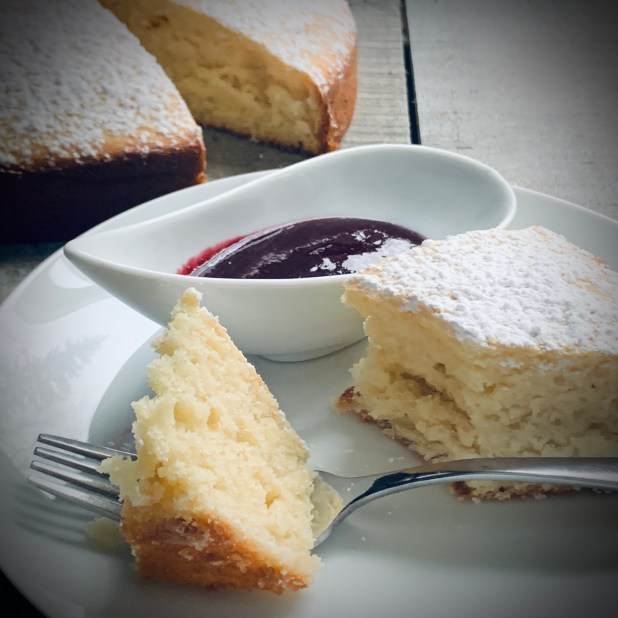
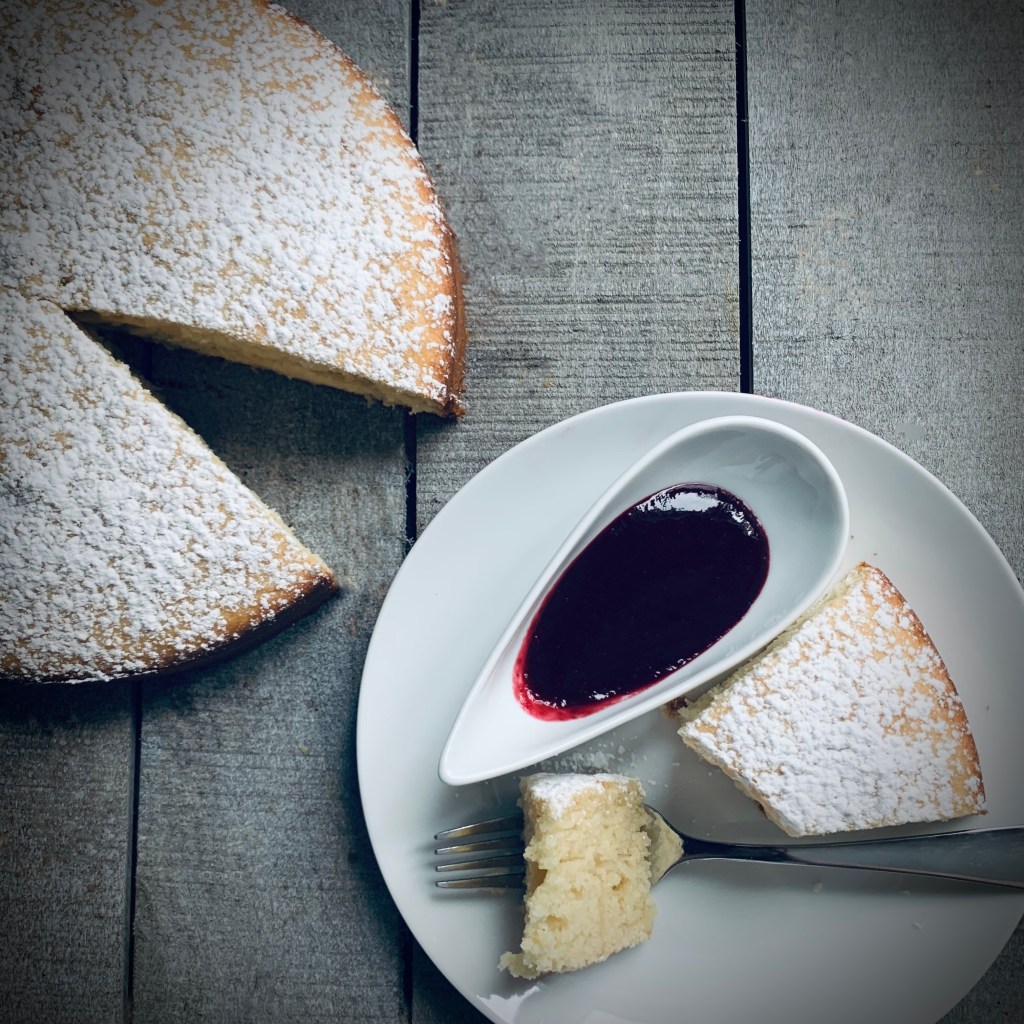
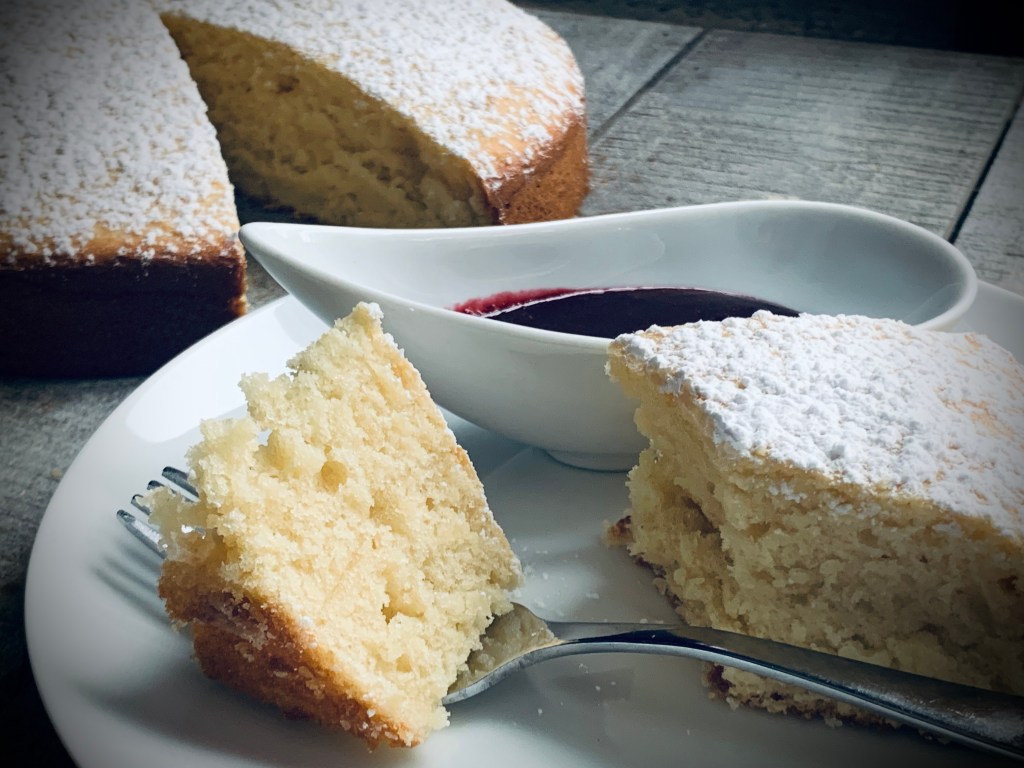
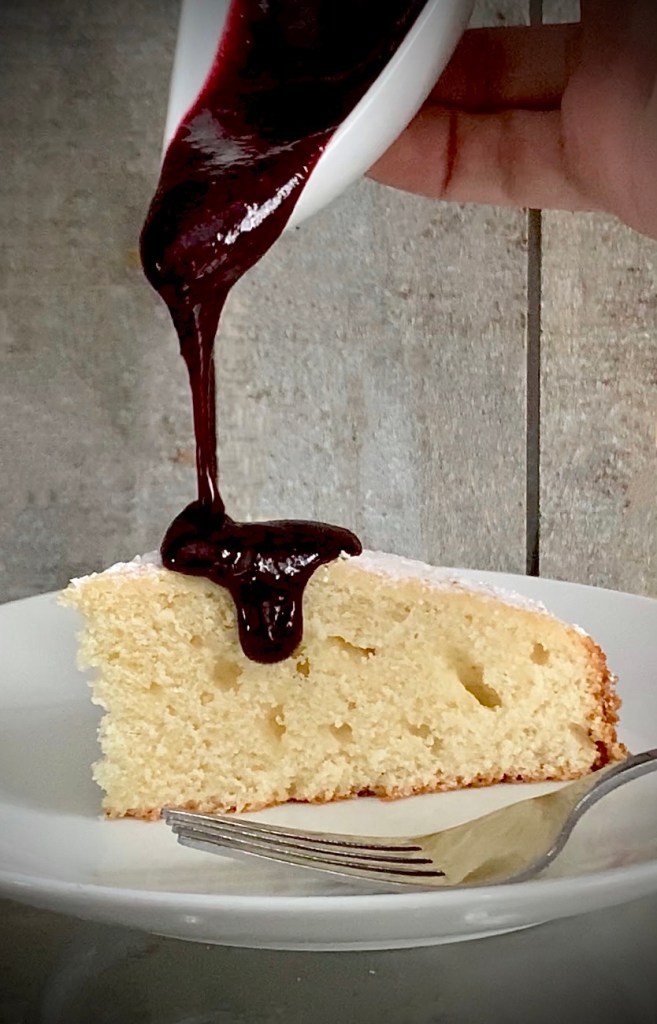
For me the beauty in this bake lies in it’s simplicity. It’s ingredients aren’t extensive, nor it’s method demanding. And as for the results? Sublime in it’s modesty this can be a welcome relief to other “fussy” bakes. The flavor is smooth and buttery, with a close crumb structure (which reminds me almost of a Japanese cheesecake) this is perfectly paired with a Chantilly cream (not very synonymous with Paddy’s Day I know) or in this case a berry coulis.
I wanted something a little bit different than your standard berry coulis here (there’s a surprise huh?) and the additions of mead and birch syrup here offer that adding both sweetness and hint of bitterness. Don’t get to wrapped up on including these though- I’m aware these aren’t exactly pantry staples. They’ll work wonders if you can include them but the coulis will be tasty treat nonetheless without them.
On that note, whatever you get up with this year’s St. Patrick’s Day festivities I hope you enjoy- heck knows it’s long overdue!
Preheat oven to 350 degrees F (175 degrees C). Grease and line a 9-inch round pan
In a bowl combine the flour, baking powder and salt and set aside
In a separate bowl (of a stand mixer), cream together the butter and sugar until light and fluffy (about 10 minutes)
Beat in the eggs, one at a time, and vanilla, mixing until fully incorporated
Stir the dry flour mixture into the batter alternately with the milk. If the batter is too stiff, a tablespoon or two of milk may be added
Spread the batter evenly into the prepared pan
Bake for 30 to 35 minutes in the preheated oven, until a toothpick inserted into the center comes out clean.
Cool in pan on a wire rack, then turn out for serving
Dust with confectioners’ sugar and serve sliced with the mixed berry coulis
Mixed Berry Coulis
In a medium pan combine the mixed berries, sugar and lemon juice
Over a medium heat stir occasionally until sugar has dissolved
Add in mead and birch syrup, reduce to a low heat and simmer for 10-15mins, stirring occasionally. Cool until berries have softened and broken down. Check taste for sweetness and stir in more sugar if needed
Remove from heat and leave to cool for 10 minutes
Using a standard blender or wand blender blitz berry mixture until smooth
This bunch of recipes started as an idea where I wanted to do something drawing inspiration from my childhood in Ireland to my current life here in Toronto. It also helped that St. Patrick’s Day was impending so that provided a nice motivational kick. I’ve included three (or should it be four?) recipes here as frankly I couldn’t decide which to include for a single recipe post. However, I do think it works quite nicely to chart the influences on my passion for baking. I shall try to keep the background blurb short as I have to admit not being a fan of rambling anecdotes myself on recipe posts (“Seriously Janice- get to the recipe already! No one actually cares about your traumatic experience with bangs and how it rekindled your childhood love of popovers…)
In the meantime have a great St. Patrick’s Day. Eat (plenty); Drink (responsibly) and Be merry (it goes without saying).
Lá fhéile Pádraig sona dhaoibhe!
Traditional Plain Soda Bread w/ Blueberry, Rosemary & Juniper berry conserve
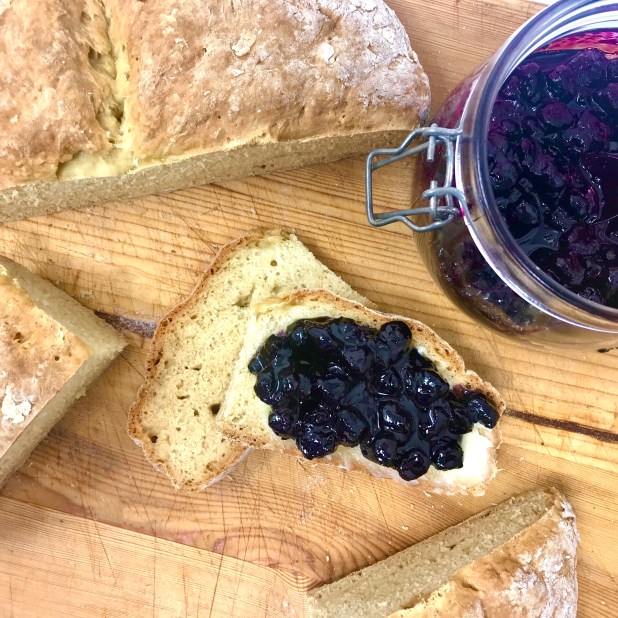
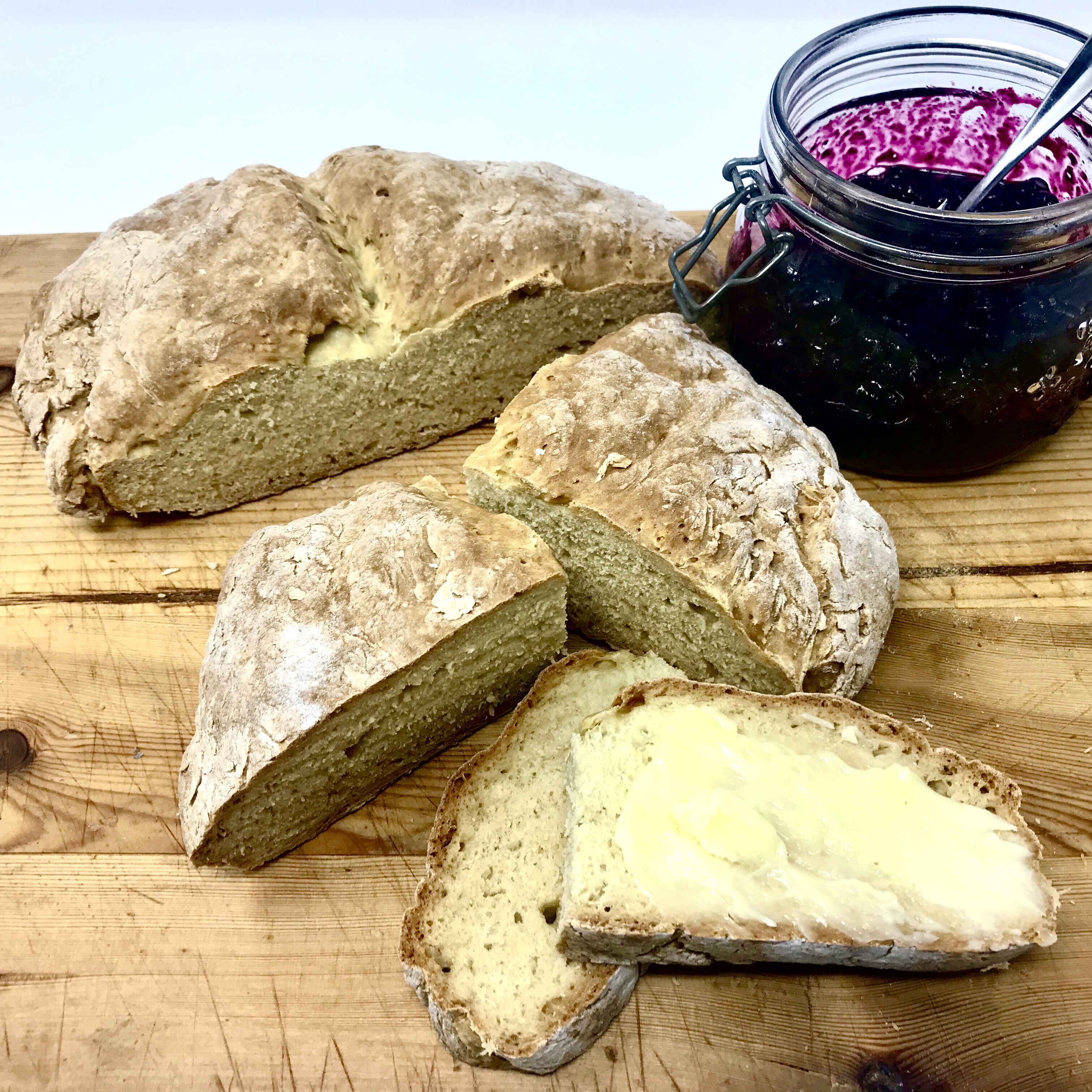
This is where I began. Well, I mean my love of baking. Soda bread was the first recipe that my mom showed me how to make in the kitchen. The bread is simplicity itself with little or no baking skill required. The conserve recipe is my substitute for the sticky jam jars of childhood. If you asked me to sum up childhood memories of baking it would be of freshly cut warm plain soda bread, slathered in butter and jam. And now I pass it on to you to make your own memories.
Plain soda bread
Ingredients
3 1/2 cups All purpose flour
1 teaspoon bicarbonate of soda
1 teaspoon kosher salt
1 1/2 cups buttermilk*
Method
Preheat oven to 450°F
Line a tray with baking parchment and dust lightly with flour. Set aside until needed
In a large bowl combine the flour, bicarbonate of soda and salt. Whisk to combine and break down lumps. Make a well in the centre
Pour in most of the buttermilk
Using one hand stir the flour into the liquid from the outside of the bowl, turning the bowl as you do. Continue until the mixture comes together in a soft dough that is not too wet or sticky (you may need the remainder of the buttermilk here)
Turn the dough out into a lightly floured surface and knead lightly for a few seconds. Don’t overknead here- you just want to do it enough so that it holds it shape. Don’t do it to the extent that you would with standard bread dough!
Using your hands, lightly floured, pat the dough into a round shape about 2 inches thick. Transfer to the floured baking sheet
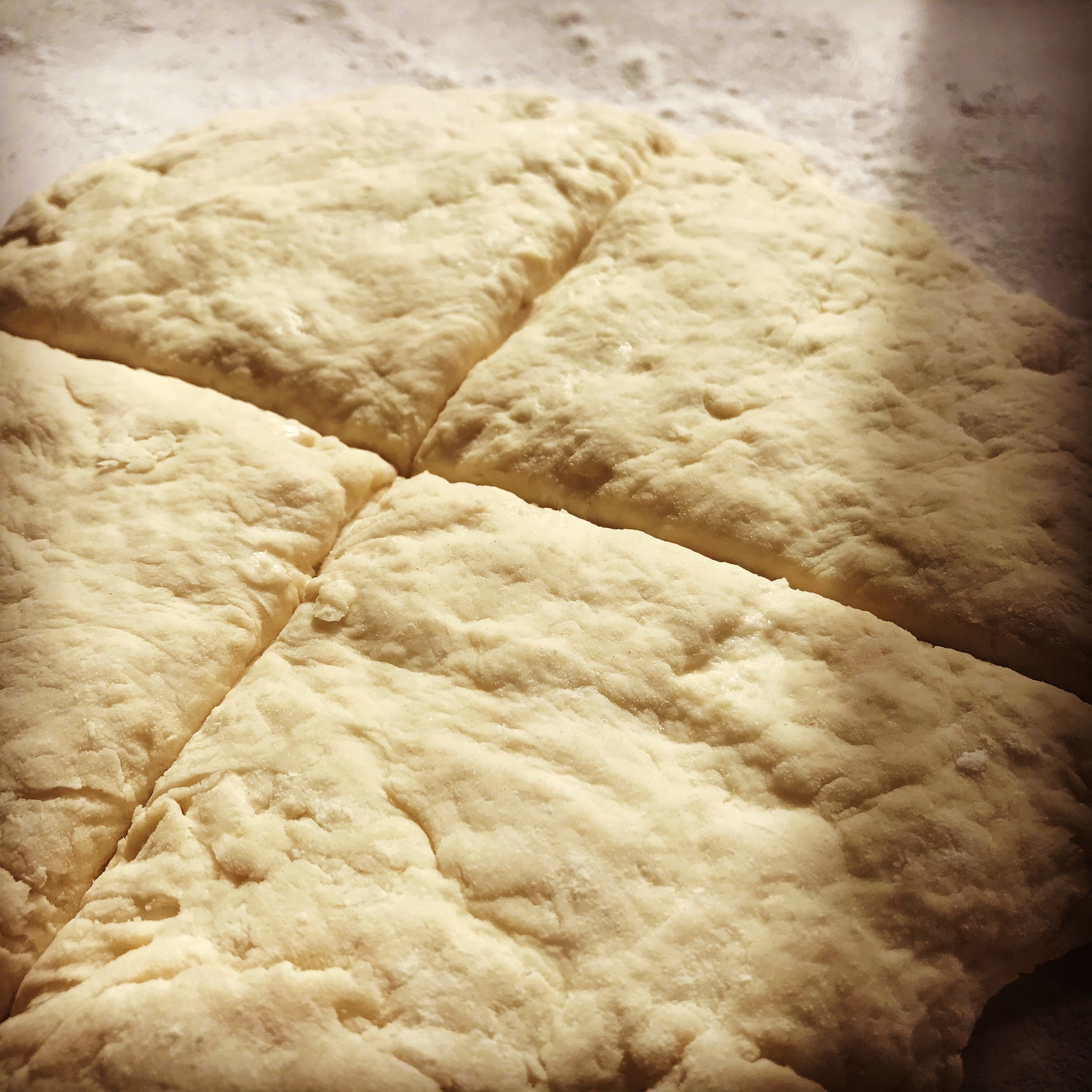
With a knife (I use a bench scraper) score a cross into the top of the loaf, so that it goes almost all the way through the thickness and over the sides of the loaf
Bake in the preheated oven for 15mins then reduce the heat to 400°F and continue baking for an additional 20mins until cooked. The baked loaf will be deep golden in color and sound hollow when the bottom of it is tapped
Remove and cool on a wire rack
This type of loaf will cool with a hard, crispy crust. If a softer crust is desired wrap a clean kitchen towel around the hot loaf and allow it to cool
*If you don’t have buttermilk to hand you can make your own by combining 1 cup milk with 1 tablespoon squeezed lemon juice or distilled white vinegar in a jug. Stir to combine and leave to sit for 15 mins. After 15 mins the liquid will have thickened slightly and small curds can be seen. Use in the recipe as required. Any remaining milk can be stored in the fridge.
In large pot combine the blueberries, juniper berries, sugar, lemon juice and water
Stir over a medium heat until the mixture becomes loose and the berries start releasing liquid
When the berries have soften and you see more liquid add in the spring of rosemary, ensuring it is submerged in the liquid
Continue over a medium, stirring occasionally, for 30mins until the fruit has broken down and slightly thickened
Remove from heat, transfer the mixture to a bowl and allow to cool to room temperature and infuse
When cool place in a sterilised jar. Serve with traditional soda bread
Báirín Breac (Irish Barmbrack)
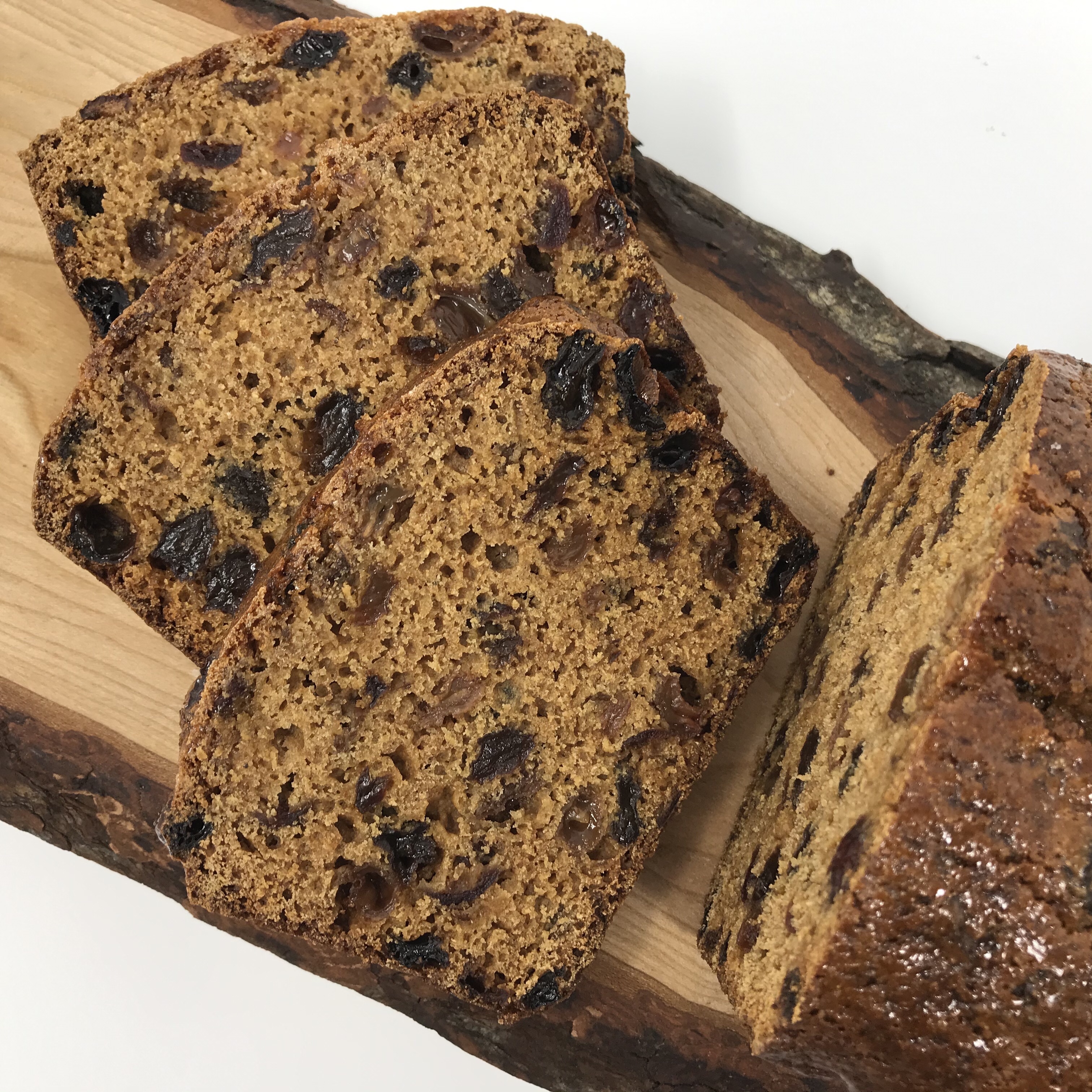
As a kid I hated dried fruit. Hated it with that primal fervour only a child can manifest when presented with something they don’t like. Not only was barmbrack out- also Christmas cake, fruit cookies and anything else harbouring any sign of a shrivelled morsel. Interesting then that as an adult I can have a hankering out of the blue for something with dried fruit. Perhaps making up for lost time? Whilst more traditional to see it at Halloween, barmbrack for me is synonymous with my roots in Motherland Hibernia. Here I’ve made some additions and substitutions- mead in addition to the traditional tea steeping fluid to give a little extra indulgence; Red Fife flour to add an extra layer of nuttiness to the loaf; and cranberries as, even after all these years, candied peel still abhors me.
Makes 1 loaf
Ingredients
1 cup raisins
1 cup sultanas
1 cup cranberries
1 1/2 cup black tea, freshly made
1/4 cup mead
3/4 cup dark muscovado sugar
1 cup All Purpose flour
2/3 cup Red Fife flour (or substitute wholewheat)
2 teaspoon baking powder
1 teaspoon mixed spice
1/2 teaspoon ground nutmeg
1 teaspoon vanilla extract
1/4 teaspoon kosher salt
1 egg, beaten
To finish
2 tablespoons sugar
2 tablespoons water
Method
Put the raisins, sultanas and cranberries in a large heatproof bowl, pour over the tea and mead. Stir to combine ensuring all the fruit is wet. Leave to soak overnight, or minimum 6 hours, stirring occasionally
Heat the oven to 350°F and grease 4.5″ x 8.5″ loaf tin pan and line with baking parchment
In a second bowl, whisk together the sugar, flour, baking powder, spices and salt, making sure you break up any lumps in the sugar, then stir in the fruit mixture (including liquid), beaten egg and vanilla extract. Mix well to combine
Tip the loaf mix into the tin, smooth the top and bake for 80 minutes, until a skewer comes out clean. (If the top looks to be going too dark or burning on top towards the end, cover loosely with foil)
Take out of the oven, leave to cool in the tin for 15 minutes, then turn out on to a baking rack
Whilst the loaf is cooling make the sugar syrup.
In a small saucepan combine the sugar and water. Heat the sugar and water over a high heat until the sugar has been dissolved. Bring to a boil and continue stirring over a high heat for 1 minute
Remove from the heat and allow to cool slightly before applying to the loaf
When the loaf has been turned out on to the rack, liberally brush the top and sides with the cooled syrup
Allow to cool fully to room temperature before slicing and serving
Serve slathered in fresh butter and with a hot cup of tea for the quintessential Irish experience.
Store the baked loaf wrapped in wax paper, or baking parchment, in an airtight container. The taste and texture of the remaining loaf will improve over time becoming more “fudge” like.
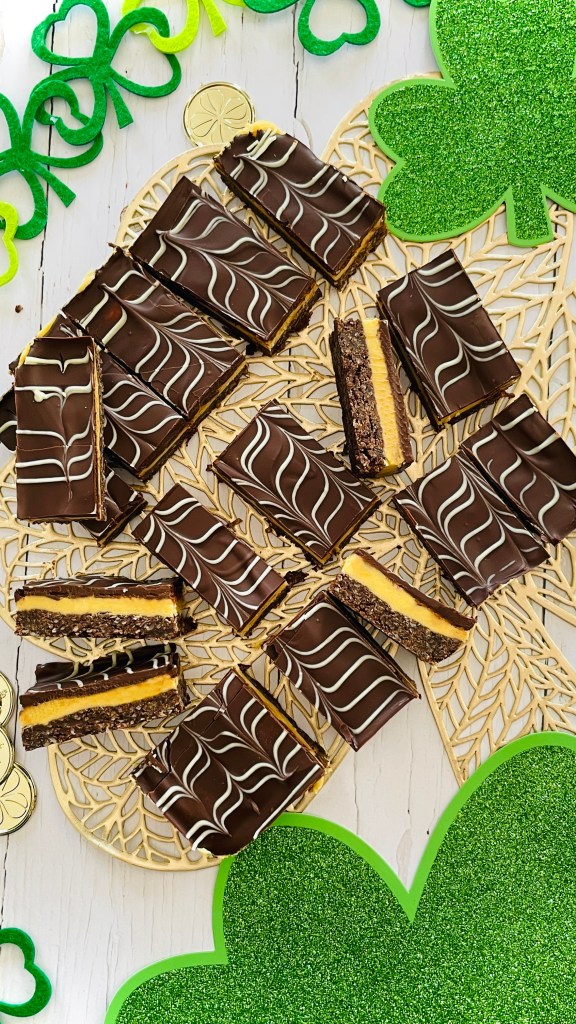
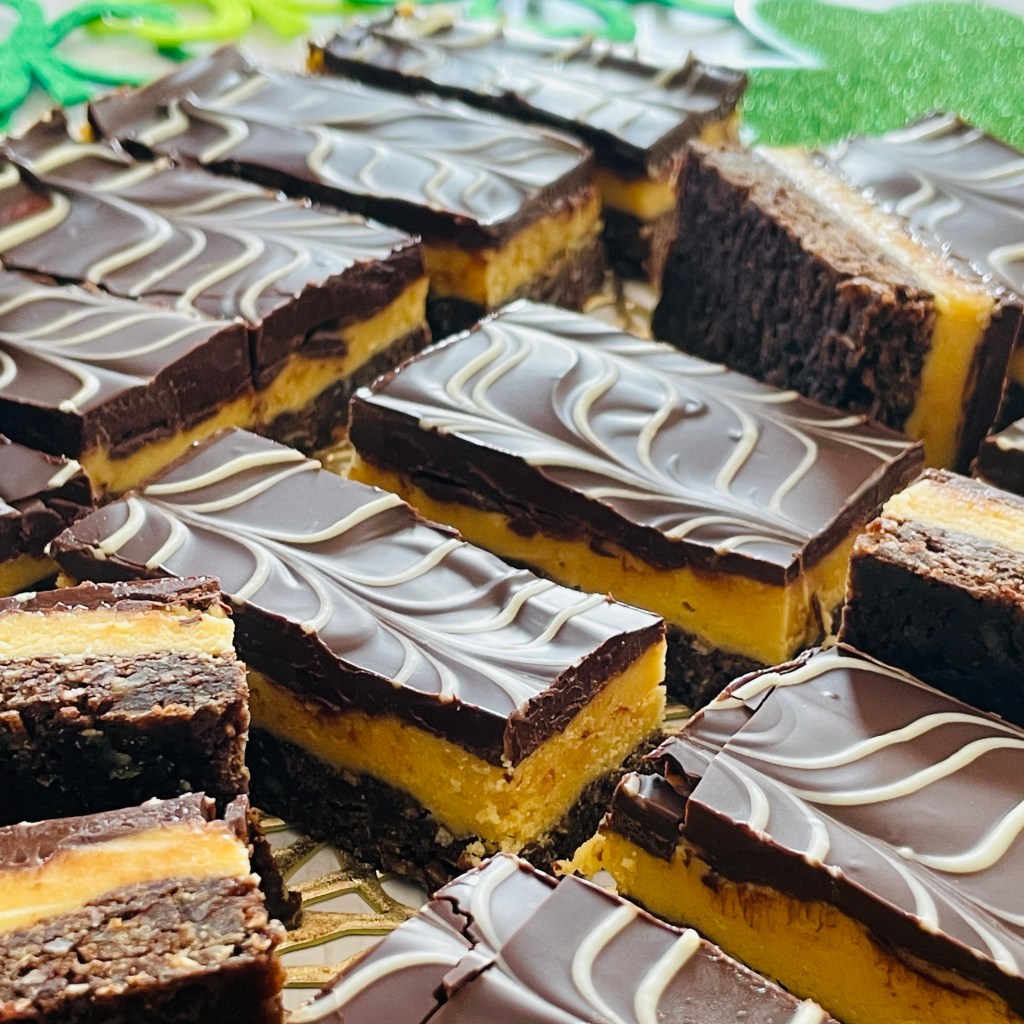
Irish Cream Nanaimo Bars
While the previous recipes had their roots firmly planted in childhood memories and influences, this is a blatant (and heady) nod to the influences of my current home. Numerous Canadian baked goods have won me over – butter tarts; beaver tails; Pouding Chomeur but the Nanaimo bar truly hits my sweet Achilles heel. And how do you make something that perfect better? Why by adding booze of course! More specifically Irish Cream. Take your pick of the ones available out there but my preference is for the stalwart that is Baileys. Not that I’ve made trays of liqueur riddled sweet bars in order to research. Of course not!
Makes 24
Ingredients
Bottom Layer
1/2 cup of salted butter, melted
1/3 cup of unsweetened cocoa
1/4 cup of granulated sugar
1 large egg, beaten
1 1/4 cups of graham cracker crumbs
1/2 cup of sweetened shredded coconut
1/3 cup semi-sweet chocolate, chopped finely
1/2 cup walnut pieces, chopped and toasted
Middle Layer
2 cups of icing sugar
1/2 cup of butter, softened
2 -3 tablespoons of Irish Cream liqueur, I use Baileys
2 tablespoons of cornstarch
Top Layer
3/4 cup of semi-sweet chocolate chips
1/2 cup white chocolate chips
2 separate tablespoons of butter
Method
Preheat oven to 350°F. Line a 9x9inch baking pan with parchment paper
For the bottom layer, in a medium bowl, combined the sugar and melted butter. Stir until the sugar is nearly dissolved. Add in the graham crumbs, shredded coconut, cocoa, chopped chocolate and walnut pieces. Combine well. Add in the beaten egg and again mix well to combine
Press the mixture into the lined baking pan. Bake in the preheated oven for 10 minutes, remove and set aside to cool (I usually cool mine in the fridge as i make the middle layer)
Whilst the bottom layer is cooling prepare the middle layer
In the bowl of a stand mixer (paddle attachment fitted) combine the icing sugar, softened butter, cornstarch and liqueur. Beat on slow until all ingredients are combined and then increase the speed to high for a few minutes until the mixture is whipped and fluffy. Spread the whipped mixture evenly over the cooled bottom layer. Place in the fridge to cool while you make the top layer
Combine the semi-sweet chocolate chips and 1 tablespoon of butter in one heatproof bowl and the white chocolate chips and the other tablespoon of butter in another heatproof bowl. Melt both bowls of chocolate, one at a time, set over a pan of hot water. Spoon dollops of each melted chocolate over the cooled middle layer and using a knife spatula or spoon swirl together to evenly coat the top of the mixture
Place in the fridge and chill for minimum 2 hours before slicing (4x 6) and serving.
Keep the bars refrigerated for up to 3 days in a closed container, or frozen for up to 3 months
Soda bread was one of the first things I remember watching my mother make/bake in the kitchen. From my seat on the kitchen drainer I would watch how she’d mix and shape the dough into the thick, dense cakes and I’d hanker for a warm slice, the melted butter dripping down my greedy knuckles. Beats crumpets any day! With the minimum of ingredients it was her “go to” recipe when cupboards were getting bare- maximum flavour from minimum input. So often was it made in my childhood house that there was no need for her to weigh or measure quantities. It was an instinctual process, hands tracing what seemed like arcane patterns and motions, guided by numerous loaves that came before.
The lack of yeast in the mix makes it a particularly quick and easy loaf to knock together. No kneading is required and the mixing is minimal (to avoid an overly heavy dough). So it really is just a case of mix, shape and bake.
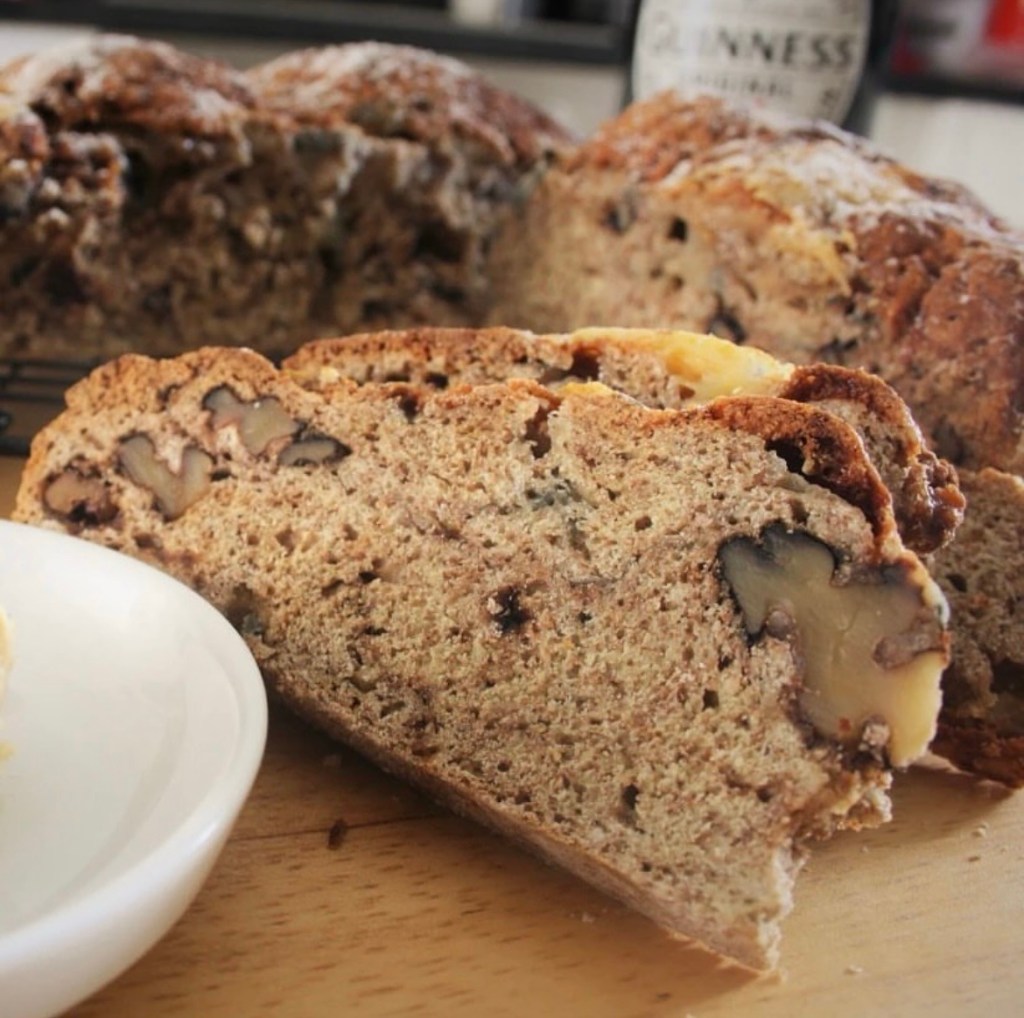
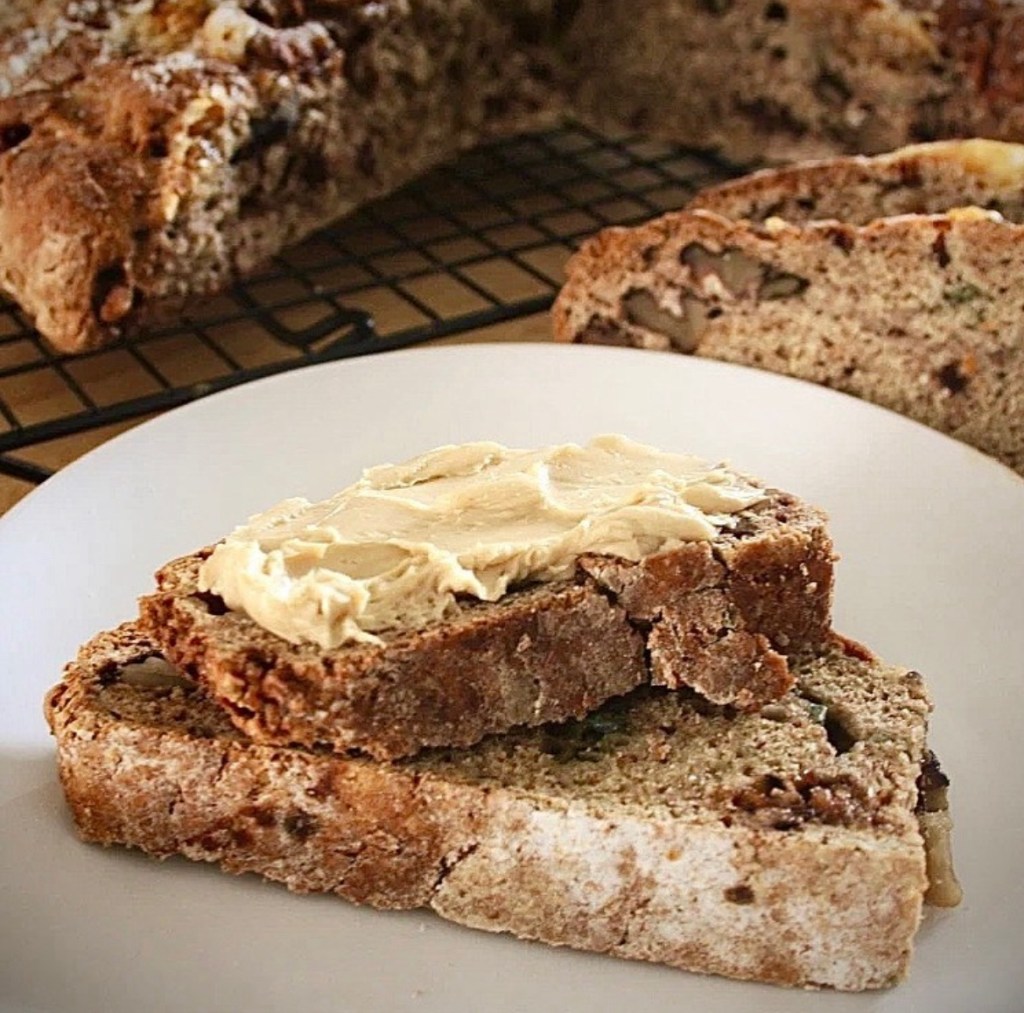
Whilst I have kept to the basic recipe as taught to me (flour, bread soda (bicarbonate of soda), buttermilk and salt, I have as usual added my Mr. Mom’s twist. The additional of the caramelised walnuts and blue cheese add wonderful pockets of sweetness and Unmami to the earthy wholemeal dough. I serve mine here with Guinness infused butter to make it just that little bit more indulgent for a St. Patrick’s Day treat.
450g wholemeal flour 175g plain flour 2 teaspoons bicarbonate of soda 1 teaspoons salt 475ml buttermilk (450ml milk with 1 tablespoon lemon juice stirred in) 100 g Cashel Blue cheese, plus extra for topping Caramelised walnuts (see above)
Guinness Butter
1 quantity of homemade butter (See the recipe here)
150ml Guinness Stout (not draught)
4 teaspoons Irish heather honey (If you can’t find this, ordinary honey will be fine)
Pinch of salt
Method
Caramelised walnuts
Set aside a non-stick baking tray. If you don’t have non-stick variety to hand, just line a standard tray with baking parchment.
Combine all the ingredients in a pan over a medium heat.
Stir to combine and to stop the mixture from catching.
Continue until the butter and sugar have melted. At this point you need to stir continuously until the syrup turns a deep shade of amber.
Immediately remove from the heat and tip the mixture onto the (lined) baking sheet. Using two forks separate the nuts individually so that they don’t clump together.
Allow the nuts to cool on the baking tray before use. (As a side note these make wonderfully tasty drinks snacks as they are like this. I often make a double batch!)
To make the soda bread
Preheat your oven to 180C/gas mark 4.
In a large bowl combine the dry ingredients (including the candied walnuts and cheese) and mix well.
Make a well in the center, and add in roughly 1/3 of the milk. Mix lightly.
Add in the second 1/3 of the milk and again mix until just combined.
Add in the final amount of milk and mix until a dough is formed and there is no dry flour remaining in the bowl.
Tip the dough out onto a lightly floured surface and lightly knead.
Form into a round about 1 1/2 inch thick transfer to your baking sheet.
Stud the top of the loaf with a few chunks of blue cheese (to taste) and dust with flour. Score the top of the loaf in half with a floured, sharp knife. Turn the loaf 90 degrees and score again so that you have a cross shape dividing the top of the loaf into quarters, then prick each of the four quarters**
Bake the loaf in your preheated oven for about 45mins. Test by tapping the bottom of the loaf- it should sound hallow. (If the top of the loaf starts to brown too quickly, loosely drap some foil over it). Once baked remove from the oven, transfer to a wire rack and allow to cool.
Serve with Guinness Butter (see recipe below) or for a traditional Irish after-school treat slathered in butter and jam!
To make the Guinness Butter
Heat the Guinness in a pan over a high heat and reduce down to 1/3 volume. You should have a denser syrup. Remove from heat and allow to cool fully.
Place the butter in a bowl of stand mixer, add in the cooled Guinness syrup, honey and salt.
Beat on medium until combined then increase the speed to high and “whip” for about 5-7 minutes until all the ingredients are fully combined and mixture is fluffy in texture.
Remove the butter from the mixing bowl, transfer to a dish and serve alongside the prepared soda bread.
**Although these two actions have a practical use in the making of this bread, the traditional meaning lends a much more romantic slant to them as only the Irish can. Cutting the loaf into quarters is said to be “Blessing the bread” so that it the house making it may never run out of it. Pricking each of the quarters is “to let the Sidhe (fairies) escape” in order to avoid any havoc they make reek if kept trapped in the bread. Quite how they got in there in the first place is beyond me by who am I to argue with centuries of tradition!







 Crumbs In My Beard