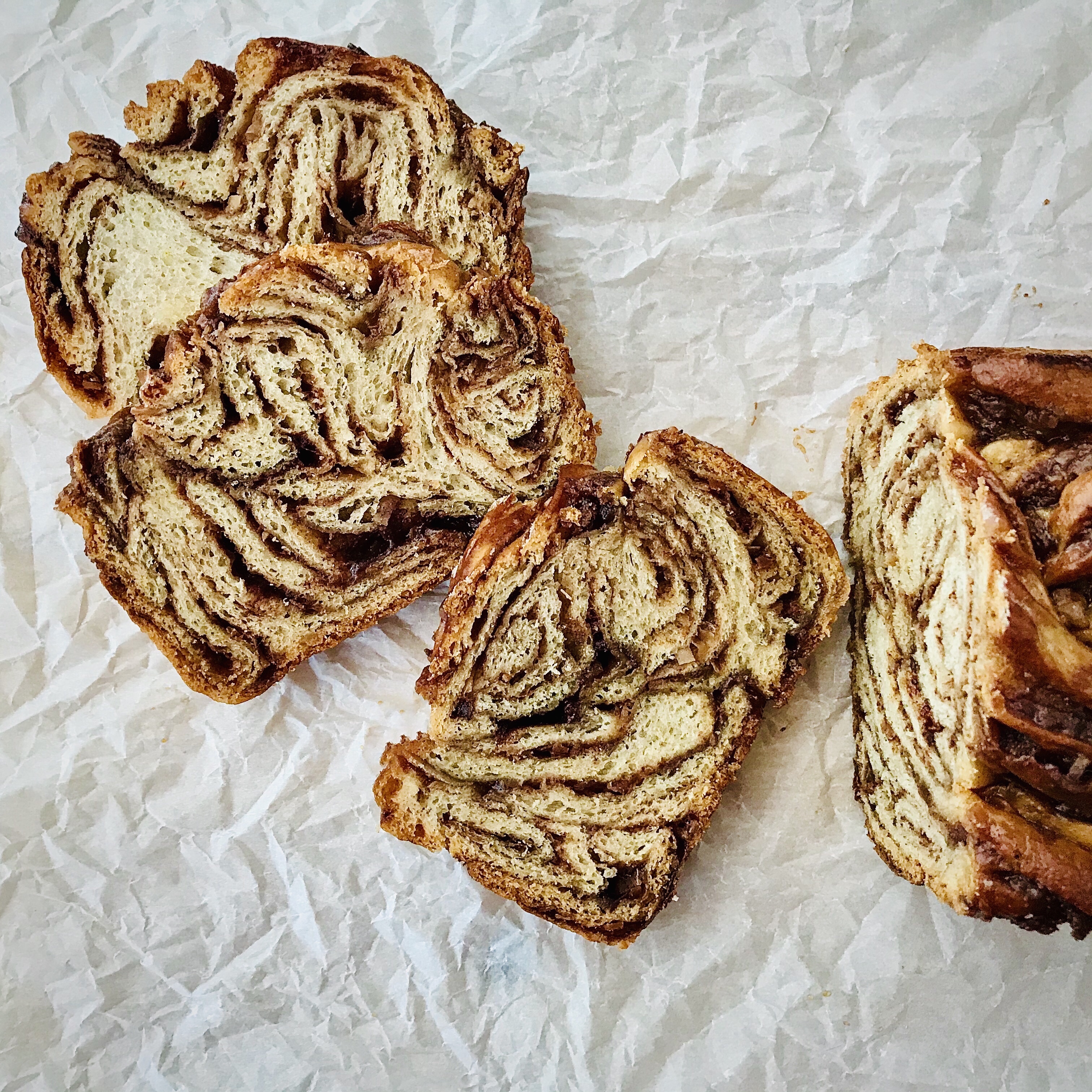
Covid quarantine has been interesting to say the least. Amongst everything else the lighter side of things including apocalyptical shortages of toilet tissue; mind-numbing cabin fever and Netflix binges galore to say the least. But it’s the baking I’ll remember. Never in any pandemic themed movie was there a world where the protagonist’s quest revolved around that of All Purpose flour and yeast. CV-19 triggered peoples’ inner baking gusto. Was it the yearning for self-sufficiency in an uncertain world, or perhaps that solace of creative therapy? Everyone has their own answer no doubt. What I do know is that never have my social media feeds been so alive with breads and bakes from domestic kitchen alchemists. Sourdoughs, scones and banana bread. Oh- the plethora of banana breads! 101 ways with that familiar speckley brown fruit. But another baked bread that’s been quietly enjoying a renaissance is the Babka.
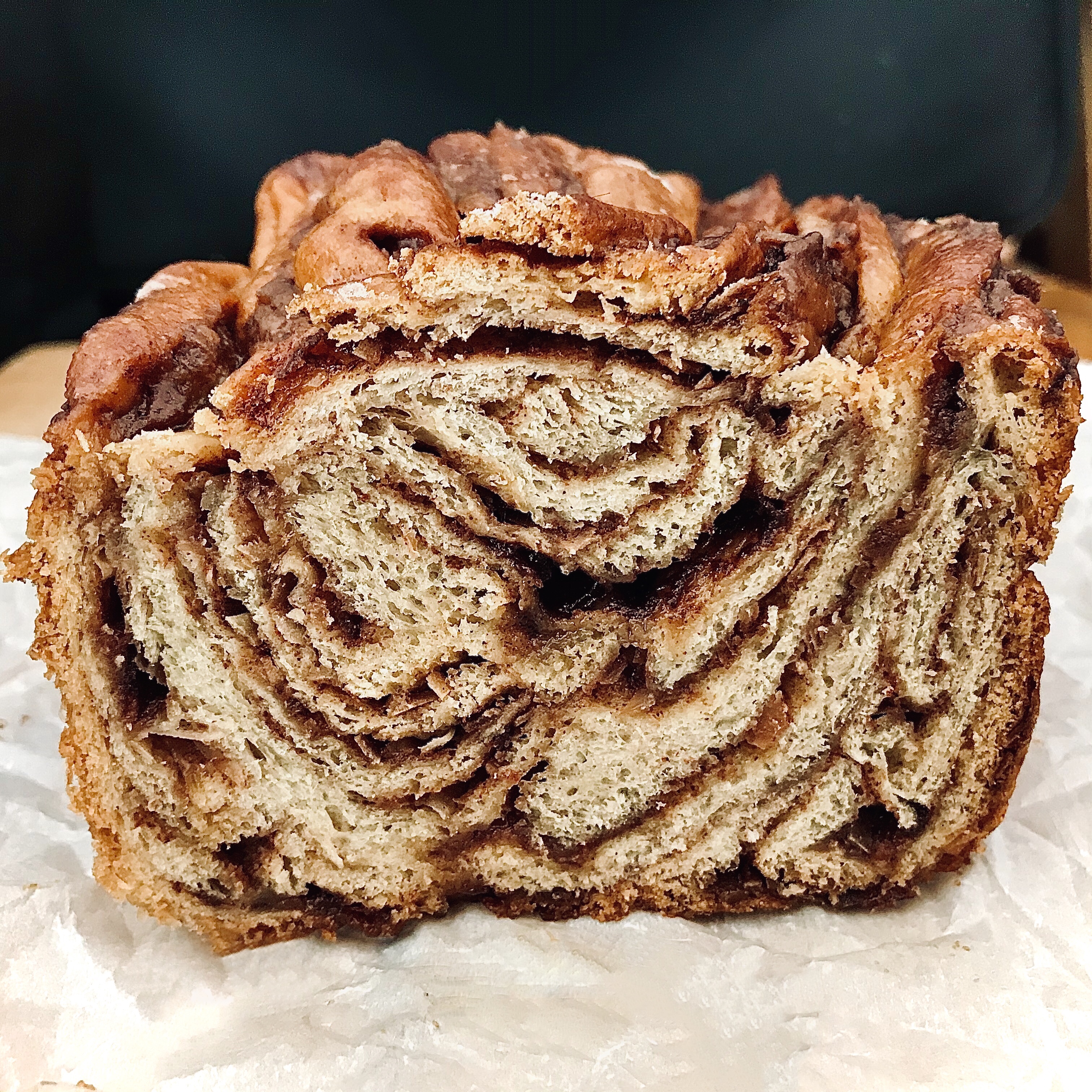
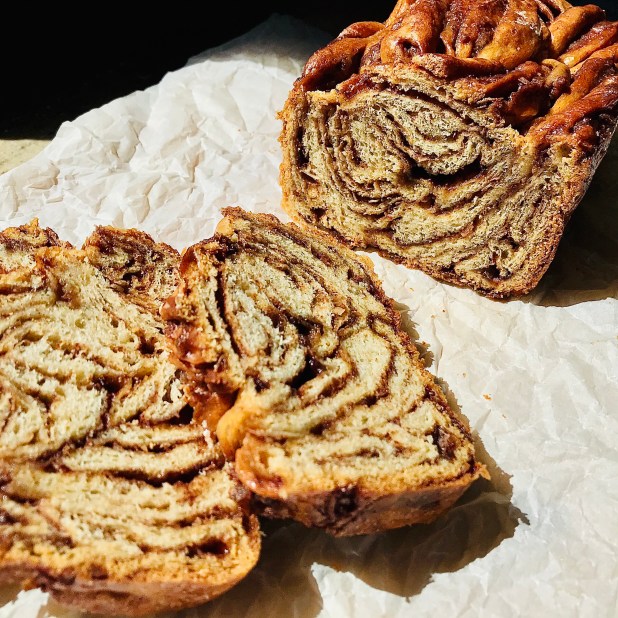
This one’s been on my ‘To Do’ list for a while. Surely I’m not the only one who finds something hypnotic about the ripples, folds and swirls of the this loaf. And so multi-purpose too! Stuck for breakfast? Lightly toast a slice as a perfect crispy-edged morsel with your coffee. Last minute dessert needed? Gently oven warm and top with a scoop of French vanilla ice cream, and melt into the sublime comforting gooeyness.
There appears to be much debate about which is best, and dependent on which part of which city you live in who’s is best. Whether it’s to be chocolate filled, or cinnamon laden; sweet or savory. Just like the layers in a babka the opinions are many and varied. I will freely admit to using the term “babka” here in air quotes. Whilst it might have to multi-layered look of the traditional Jewish bread I use my go-to recipe for enriched dough which usually forms the basis of my cinnamon bun recipe. Whilst it’s not a laminated dough, in the sense of croissant structure, it is more akin to a couronne with layered structure twisted and on show.
I feel it only right to give a quick, but hopefully respectful, snapshot history on the baked loaf. The loaf’s name itself is in reference to it’s root’s in the Jewish communities of Eastern Europe- “babka” meaning “little grandmother” in Ukranian, Russian, and Eastern European Yiddish. It’s told that on Shabbat, grandmothers would twist leftover scraps of challah bread with seeds and nuts, forming something not that dissimilar, if a little less sweet, to the babka we know today. With the influx of Eastern European Jews to the United States, especially New York, sweeter fillings were introduced. Chocolate, for instance, was much more obtainable and was included in the bake making the babka closer to the sweet treat we know of today.
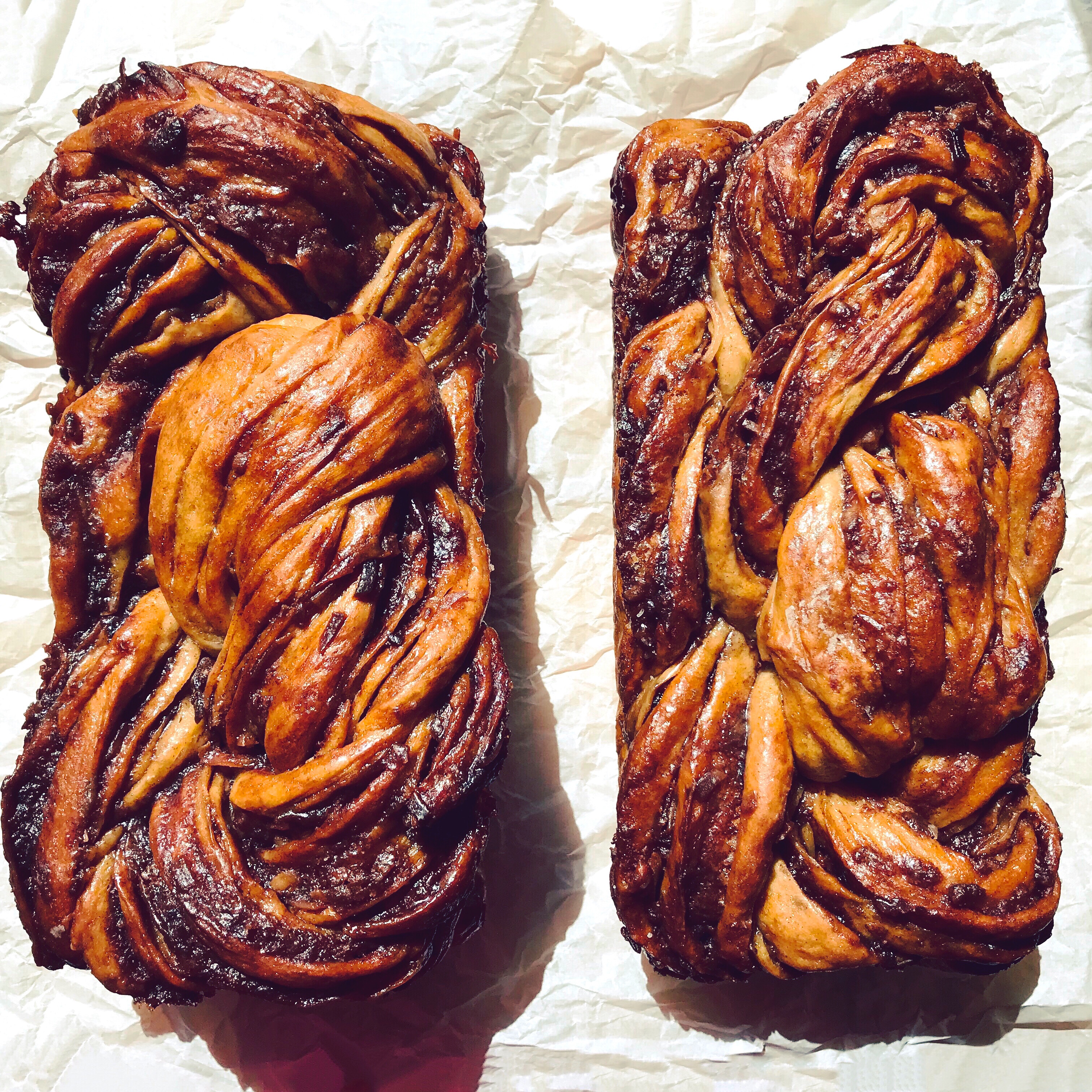
Whilst traditionally there seems to be a preference for topping the loaves with a sweet streusel topping I opted here for the lesser known alternative of a simple syrup glaze in order to have those wonderful braid-induced swirls on show. I’ve added toasted coconut to the traditional cinnamon paste filling to add an extra layer to the caramel tones of the paste whilst appealing to my penchant for all things “coconuty”. The recipe here is ample for two loaves- one for immediate scoffing and the other is ideal to pop in the freezer for later date. Simply thaw at room temperature until defrosted to enjoy!
Ingredients
For the simple syrup glaze
- 1/2 cup fine sugar
- 1/2 cup water
For the dough and filling
- 1 cup milk
- 3/4 stick salted butter
- 2 1/4 tspns active yeast
- 1 tspn sugar
- 1/4 cup lukewarm/ tepid water
- 4 cups AP flour
- 1/2 tspn kosher salt
- 1 tspn ground cinnamon
For the filling
- 1 cup shredded coconut
- 1 cup dark brown sugar, packed
- 1 stick salted butter, softened
- 3 Tbspns ground cinnamon
- 2 Tbspns maple syrup
Method
To make the simple syrup
- Combine the sugar and water in a small saucepan
- Bring to the boil over a medium high heat, until the sugar is dissolved
- Remove the pan from the heat and allow the syrup to cool fully
To make the dough
- In a jug combine the yeast, sugar and warm water. Stir and set aside for 10 minutes until foaming
- Gently heat together the milk and butter over a medium heat until the butter has fully melted. Remove from heat and set aside to cool until lukewarm
- In a pan over a medium heat, toast the shredded coconut until golden brown and fragrant. Set aside until needed
- In the bowl of a stand mixer with bread hook attached, combine the AP flour, salt, and cinnamon. Once the yeast mixture has foamed up nicely, tip it on, along with the cooled butter/ milk mixture. Set your mixer to knead for between 6-7 minutes until it comes together in a single ball and has cleaned the bowl
- Remove the dough from the mixer bowl, place in an oiled large bowl, cover and leave to rise until at least doubled in size
- Whilst the dough is rising you can make the filling. In a bowl combine the softened butter, brown sugar, ground cinnamon, and maple syrup. Stir these together until well combined
- Line 2 loaf pans with baking parchment, up and over the sides
- Divide the dough in half and set one piece aside. Knock back the first piece of dough and shape into a rectangle, approximately 12″ x 18″
- Spread half of the cinnamon paste over the flattened, shaped dough. Once you have this done, then sprinkle half of the toasted shredded coconut over the paste covered surface.
- Roll up the dough, along the long side, until fully rolled into a swiss/ jelly roll shape. Using a sharp knife or bench scraper, slice the roll, lengthwise, down the middle to expose layers of filling. Pinch together the twp halves at one end and carefully, keeping the exposed filling layer side on top twist together, overlapping into one long “tentacle” shape. Pop one end of the tentacle into the lined loaf pan and arrange the remainder of it, folding it back on itself, so that it fills the pan. It doesn’t have to be too neatly done as this adds to the overall look of the baked babka
- Cover with oiled clingwrap, set aside and repeat with the second batch of dough to fill the second loaf tin. Cover as the first and set both aside to proof for a further 45 mins
- Near the end of the proofing time, preheat your oven to 350 degrees F
- Once proofed after 45 mins, remove the cling wrap and bake in the middle shelf of your oven for 25mins. After 25mins rotate the tins front to back and bake for an additional 25mins or until the middle of the babka loaves have an internal temperature of 185 degrees F. (If you notice the top of your loaves becoming excessively brown you can tent them with some aluminium foil)
- Once your loaves are fully baked, remove from the oven and straight away brush with the cooled simple syrup. Continue until you have used up all the syrup on the loaves. Allow the loaves to cool in their tins before removing
- The baked babka loaves are best eaten within a couple of days. They can be stored for 2 days in an airtight container. They also freeze really well. Tightly wrap in baking parchment, then cling wrap and finally aluminium foil. To defrost, remove from freezer and allow to come to room temperature for slicing and serving


 Crumbs In My Beard