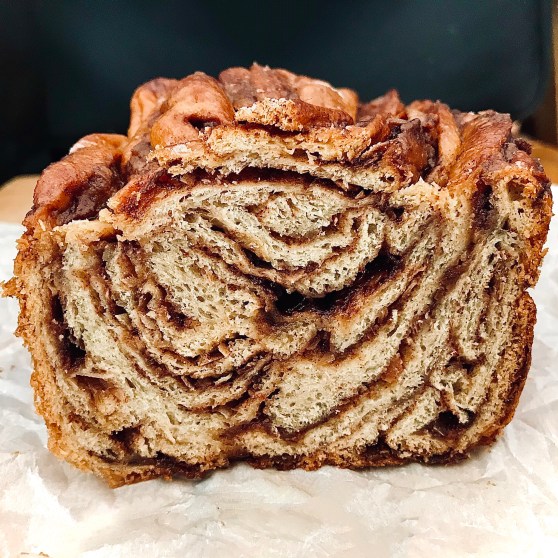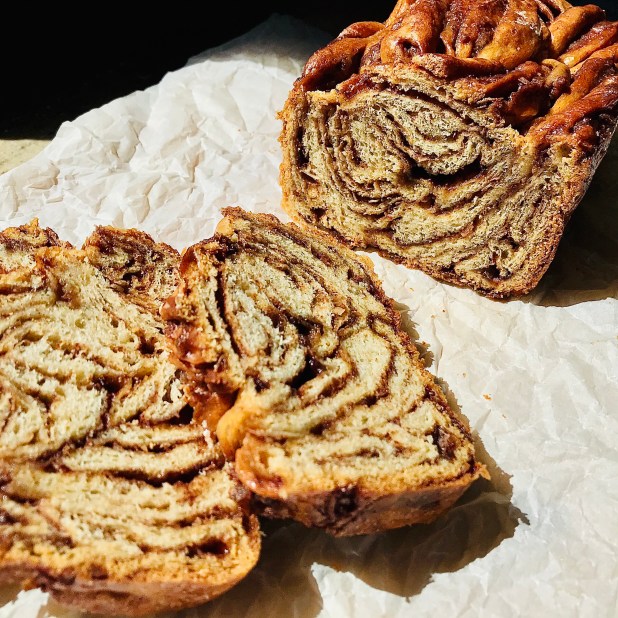
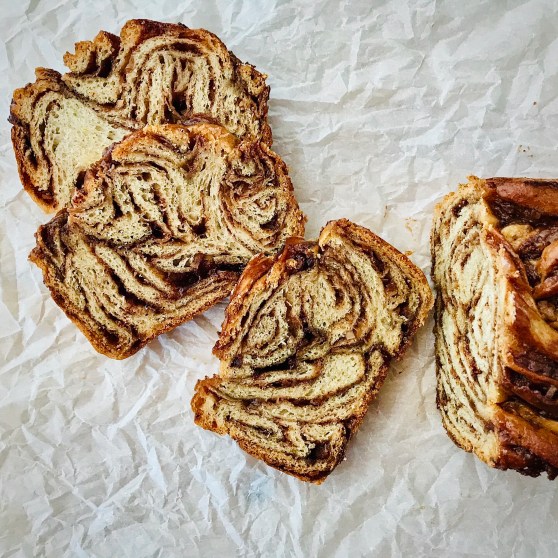
Cinnamon & Toasted Coconut “Babka”

img_8293

Covid quarantine has been interesting to say the least. Amongst everything else the lighter side of things including apocalyptical shortages of toilet tissue; mind-numbing cabin fever and Netflix binges galore to say the least. But it’s the baking I’ll remember. Never in any pandemic themed movie was there a world where the protagonist’s quest revolved around that of All Purpose flour and yeast. CV-19 triggered peoples’ inner baking gusto. Was it the yearning for self-sufficiency in an uncertain world, or perhaps that solace of creative therapy? Everyone has their own answer no doubt. What I do  know is that never have my social media feeds been so alive with breads and bakes from domestic kitchen alchemists. Sourdoughs, scones and banana bread. Oh- the plethora of banana breads! 101 ways with that familiar speckley brown fruit. But another baked bread that’s been quietly enjoying a renaissance is the Babka.

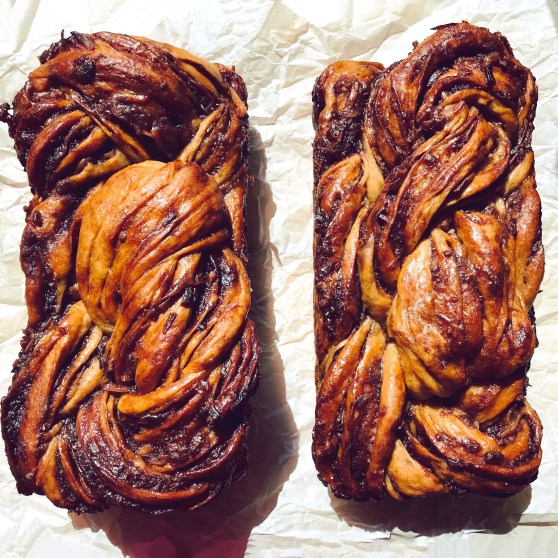
This one’s been on my ‘To Do’ list for a while. Surely I’m not the only one who finds something hypnotic about the ripples, folds and swirls of the this loaf. And so multi-purpose too! Stuck for breakfast? Lightly toast a slice as a perfect crispy-edged morsel with your coffee. Last minute dessert needed? Gently oven warm and top with a scoop of French vanilla ice cream, and melt into the sublime comforting gooeyness.

There appears to be much debate about which is best, and dependent on which part of which city you live in who’s is best. Whether it’s to be chocolate filled, or cinnamon laden; sweet or savory. Just like the layers in a babka the opinions are many and varied. I will freely admit to using the term “babka” here in air quotes. Whilst it might have to multi-layered look of the traditional Jewish bread I use my go-to recipe for enriched dough which usually forms the basis of my cinnamon bun recipe. Whilst it’s not a laminated dough, in the sense of croissant structure, it is more akin to a couronne with layered structure twisted and on show.

I feel it only right to give a quick, but hopefully respectful, snapshot history on the baked loaf. The loaf’s name itself is in reference to it’s root’s in the Jewish communities of Eastern Europe- “babka” meaning “little grandmother” in Ukranian, Russian, and Eastern European Yiddish. It’s told that on Shabbat, grandmothers would twist leftover scraps of challah bread with seeds and nuts, forming something not that dissimilar, if a little less sweet, to the babka we know today. With the influx of Eastern European Jews to the United States, especially New York, sweeter fillings were introduced. Chocolate, for instance, was much more obtainable and was included in the bake making the babka closer to the sweet treat we know of today.

Whilst traditionally there seems to be a preference for topping the loaves with a sweet streusel topping I opted here for the lesser known alternative of a simple syrup glaze in order to have those wonderful braid-induced swirls on show. I’ve added toasted coconut to the traditional cinnamon paste filling to add an extra layer to the caramel tones of the paste whilst appealing to my penchant for all things “coconuty”. The recipe here is ample for two loaves- one for immediate scoffing and the other is ideal to pop in the freezer for later date. Simply thaw at room temperature until defrosted to enjoy!

Ingredients

For the simple syrup glaze

  • 1/2 cup fine sugar
  • 1/2 cup water

For the dough and filling

  • 1 cup milk
  • 3/4 stick salted butter
  • 2 1/4 tspns active yeast
  • 1 tspn sugar
  • 1/4 cup lukewarm/ tepid water
  • 4 cups AP flour
  • 1/2 tspn kosher salt
  • 1 tspn ground cinnamon

For the filling

  • 1 cup shredded coconut
  • 1 cup dark brown sugar, packed
  • 1 stick salted butter, softened
  • 3 Tbspns ground cinnamon
  • 2 Tbspns maple syrup

img_8294

Method

To make the simple syrup

  1. Combine the sugar and water in a small saucepan
  2. Bring to the boil over a medium high heat, until the sugar is dissolved
  3. Remove the pan from the heat and allow the syrup to cool fully

To make the dough

  1. In a jug combine the yeast, sugar and warm water. Stir and set aside for 10 minutes until foaming
  2. Gently heat together the milk and butter over a medium heat until the butter has fully melted. Remove from heat and set aside to cool until lukewarm
  3. In a pan over a medium heat, toast the shredded coconut until golden brown and fragrant. Set aside until needed
  4. In the bowl of a stand mixer with bread hook attached, combine the AP flour, salt, and cinnamon. Once the yeast mixture has foamed up nicely, tip it on, along with  the cooled butter/ milk mixture. Set your mixer to knead for between 6-7 minutes until it comes together in a single ball and has cleaned the bowl
  5. Remove the dough from the mixer bowl, place in an oiled large bowl, cover and leave to rise until at least doubled in size
  6. Whilst the dough is rising you can make the filling. In a bowl combine the softened butter, brown sugar, ground cinnamon, and maple syrup. Stir these together until well combined
  7. Line 2 loaf pans with baking parchment, up and over the sides
  8. Divide the dough in half and set one piece aside. Knock back the first piece of dough and shape into a rectangle, approximately 12″ x 18″
  9. Spread half of the cinnamon paste over the flattened, shaped dough. Once you have this done, then sprinkle half of the toasted shredded coconut over the paste covered surface.
  10. Roll up the dough, along the long side, until fully rolled into a swiss/ jelly roll shape. Using a sharp knife or bench scraper, slice the roll, lengthwise, down the middle to expose layers of filling. Pinch together the twp halves at one end and carefully, keeping the exposed filling layer side on top twist together, overlapping into one long “tentacle” shape. Pop one end of the tentacle into the lined loaf pan and arrange the remainder of it, folding it back on itself, so that it fills the pan. It doesn’t have to be too neatly done as this adds to the overall look of the baked babka
  11. Cover with oiled clingwrap, set aside and repeat with the second batch of dough to fill the second loaf tin. Cover as the first and set both aside to proof for a further 45 mins
  12. Near the end of the proofing time, preheat your oven to 350 degrees F
  13. Once proofed after 45 mins, remove the cling wrap and bake in the middle shelf of your oven for 25mins. After 25mins rotate the tins front to back and bake for an additional 25mins or until the middle of the babka loaves have an internal temperature of 185 degrees F. (If you notice the top of your loaves becoming excessively brown you can tent them with some aluminium foil)
  14. Once your loaves are fully baked, remove from the oven and straight away brush with the cooled simple syrup. Continue until you have used up all the syrup on the loaves. Allow the loaves to cool in their tins before removing
  15. The baked babka loaves are best eaten within a couple of days. They can be stored for 2 days in an airtight container. They also freeze really well. Tightly wrap in baking parchment, then cling wrap and finally aluminium foil. To defrost, remove from freezer and allow to come to room temperature for slicing and serving
8b0b83f1-988d-40fe-98b8-be9223598507

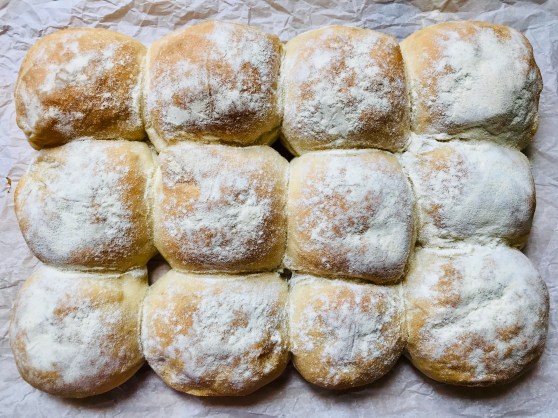
The Classic Waterford Blaa

img_7301

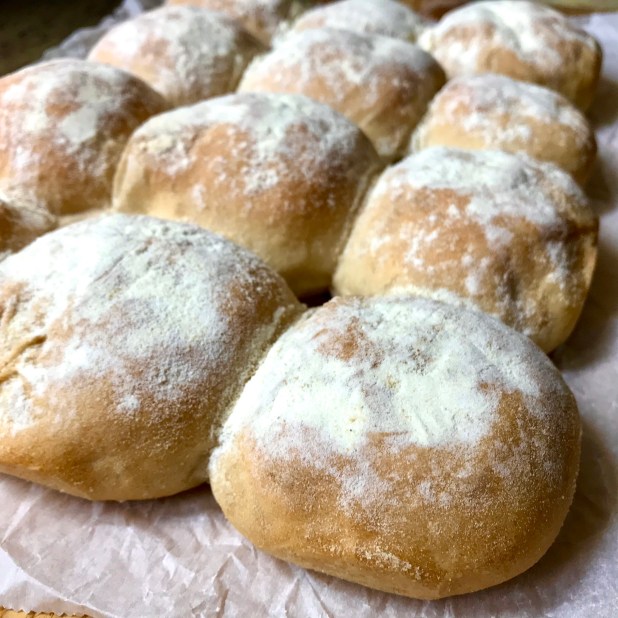
Coming from Waterford, in South-East Ireland, there are a few things that are corner stones of my childhood – Waterford Crystal; Hurling and…of course – the blaa. “The what?”, I hear you say. Well, are you sitting comfortably? The blaa is basically a bread roll. But there are a couple of features that set it apart. Roughly square-shaped, liberally dusted with flour, it has a soft chewy texture and pleasing bitter tasting crust that is dear to the heart of Waterford natives. Many a school lunch’s main feature was a buttered blaa with “Red Lead” (pink sliced deli sausage meat) or filled with Tayto crisps. Quintessential Deise fare if ever there was any!

Dating from 17th century, blaas are well ingrained into the history of Waterford. In their original form blaas were thought to be made from the scraps left over from families baking their own bread. The name “Blaa” is thought to have been possibly derived from the old Huguenot word ‘Blaad’ – an old French word for flour, or ‘Blanc,’ – a French word meaning white, which refers to the white floury appearance of the baked blaas. To the best of my knowledge there is yet to be a confirmed origin.

Such is the fame of the humble blaa that in 2013, the Waterford Blaa Bakers Association (yes there is such thing!) succeeded in getting PGI designation for the Waterford Blaa. “PGI”  stands for Protected Geographical Indication, which essentially means that only Blaas made by specialist bakers in Waterford city and county can be called Blaas. This guarantees an authentic heritage product, based on the traditional methods and the unique skills of the bakers- think champagne; Parmigiano-Reggiano and Melton Mowbray pork pies. Basically if you see something called a “Blaa” for sale outside of Waterford? It’s not the real deal. Waterford Blaas are now supplied by traditional family bakers operating since the 1800’s. Sadly these days the family bakers have deminished with but a handful remiaining.

Whilst this recipe isn’t PGI approved, it has stood the test of time in my family. Having been passed down through generations (to date I’ve confirmed 3) there apparently has been no tweaks or amends to the original recipe. It remains true with a form that conjures memories of frenzied Saturday morning sibling debates as to whose turn it was to fetch the weekly dozen from the local store. I’ve eaten in some fancy restaurants with both divine and questionable cuisine. However I’ll be perfectly honest and say I have yet to experience anything that makes my heart swell and induce instant comfort like biting into a buttered blaa filled with Tayto cheese & onion crisps. Flour-dusted lips savouring that sweet chew contrasting with crunchy savoriness. Bliss!

img_7304

Ingredients

  • 4 cups Bread flour
  • 2 1/4 tspns quick-rise instant yeast
  • 1 tspn fine salt
  • 1 tbspn fine sugar
  • 1 tbspn butter
  • 50ml milk
  • 325ml water
  • 1/2 cup AP flour (approximately) for final dusting

Method

  1. In a pan combine the milk and butter. Heat gently until the butter is melted. Set aside and leave to cool while you prep the rest of the ingredients, stirring occasionally
  2. Lightly oil a large bowl and set side until needed later
  3. Sift the flour into the bowl of a stand mixer. To one side of the bowl add the yeast and to the opposite side add the salt. Add the sugar in the middle
  4. Combine the warm water and milk/ butter mixture and stir well. With the dough hook attachment working on slow speed, slowly add the liquid to the dry ingredients in a steady stream. Continue to add until  50 ml remain. Depending on your kitchen conditions eg temperature and humidity, you may not need to add all the liquid- only add enough liquid for your dough to form a ball and clean the bottom of the bowl. Continue to knead on slow for 7 mins. The dough should come together in a ball that is smooth and elastic to touch, without cracking or breaking
  5. Remove the dough ball from your mixer bowl and place in the preoiled bowl. Cover and set aside to proof in a  warm place for between 50-60 mins until doubled in size
  6. After this time, remove the bowl and punch down the risen dough to knock back the air. Gather the dough in to a smooth ball shape, place back in the preoiled bowl and recover for a second proof. This proof won’t take as long, between 30 – 40 mins. DO NOT SKIP this step as it helps to add to the distinctive flavor of the finished blaas
  7. Once the second proofing has been done, remove the dough from the bowl and divide equally into 9 or 12,  depending on how big you want your final blaa to be. An amount of 9 will give a more traditional palm-sized blaa
  8. Roll each of the equally-sized pieces into a smooth ball and place together in a high-sided pan. I tend to use a roasting tray that I have dusted/ dredged with flour. Place the dough balls side by side until you have a “sheet formation”. Ideally they should be spaced so that when they finish rising they touch each other. The “mouths” that are formed from this at the sides of the baked blaa are a distinguishing feature allowing easy opening
  9. Cover the dough balls with oiled clingfilm and allow to rise in a warm place for a further 30 mins.
  10. Preheat your oven to 425 F. By this time the balls should have risen and be touching each other
  11. Dust the tops of the blaas liberally with flour and place on the middle shelf. Bake for 20-25 mins. The tops of the blaas should be lightly browned and bases sound hollow when tapped
  12. Remove the baked blaas from the tin and allow to cool to warm before serving
  13. Blaas are best eaten on the day they are baked. If you do have any left the following day you can refresh them by wrapping in foil and baking them at 375F for 10 mins. Overall they will keep in an airtight container for up to 3 days

Traditional fillings for blaas

  • Bacon (rashers)
  • Tayto crisps (Irish potato chips and they MUST be Tayto!)
  • Sausages
  • “Red Lead” (Irish deli meat sausage slices. Ultra-pink in color!)

Other fillings that can be delicious-

  • Sliced roast chicken and stuffing
  • Bacon and fried egg
img_7309

A meeting of worlds- The Waterford blaa filled with Canadian peameal bacon


The Magic of Yeast Water

img_5498
First they came for the hand sanitizer, then they came for the TP. Finally they came for…the flour & yeast? Yeah- The Time of Covid has been a stressful, testing and, let’s face it, downright weird one. Panic induced mob-mentality has led to mass line-ups outside grocery stores and bulk buying of household items in order to weather self-isolation orders and solitude. 

Whether it’s genuine creativity or social media induced compulsion it’s also led to an exponential increase in people home-baking. Despite the majority of grocery market shelves being repopulated with once scare items, a social distance complying stroll through any baking aisle will reveal barren, flour dusted shelves that once accommodated flour of all varieties and it’s habitual partner-in-crime…yeast.

Yeast shortage bedamned! Whilst I realized that I did NOT have the space to accommodate a domestic flour mill, what I could set about investigating was yeast and it’s production. I mean- I’d had already gotten a pretty solid hold on the process of Kombucha brewing -whatever else there is NO shortage of scobies at my house! That process involved yeast and it’s cultivation so how different could growing yeast for baking be? Turns out not so much. Use of a base fruit to cause a fermentation reaction (I use raisins here) and a few more steps. Said reaction then causes the production of yeast with which you can make use of in bread-making. Seems easy right? Well technically it is. BUT don’t expect it to be a speedy process. It takes almost a week to brew the initial yeast water- and that’s BEFORE you actually start on the bread production- which is slow. It seems that making bread by using naturally grown yeast, weather via a dough starter or yeast water, is a slower process than using your packet or jarred variety. 

Please don’t think that I’m nay-saying the process. Quite the opposite in fact. Is the slow lengthy process of brewing and proofing so bad after all? In world now fraught with anxiety and frustration, is spending time on things so bad? Basking in the mindfulness of a task or hobby is hardly disadvantageous. I mean- time isn’t one of those things in shortage right now? Although a lengthy effort to make and bake with yeast water I can definitely say it’s one heck of a rush of elation and satisfaction when cutting in to the final baked loaf.  And I will say it’s a delay well worth waiting for once you taste the final protracted fruits of your labour. Using natural yeast adds so much more character and dimension to your loaf that you’ll never get with the speedy but banal convenience of quick yeast again.

Another positive aspect (if more practical) is that once the initial yeast water is brewed there is minimal, if none at all, upkeep of it in comparison to it’s celebratory sourdough starter cousin. “Apparently” it’s just a process of just drain off the fruit, storing the yeast-rich water in the fridge, using it when needed. You only need to add more components when the source water runs low and you need to make more. (I say “apparently” as I’m in the middle of this process myself – so expect updates!)

I’m still testing out varying methods of dough proofing and crafting, and in doing so am trying a various hodge-podge of principles and methods “a little of this, a little of that”. Initially I used a sourdough method of using a starter and levain. As this method resulted in success (see the final video) it’s the one I detailed here.

*Later in the recipe I use a bench scraper to help with the procedure. Whilst not essential, you can use your hands, it does make the job easier.
I also make reference to something called  “50/50 mix”. This is a half and half mixture of bread flour and rice flour. The smaller, coarser grains of the rice flour helping to overcome dough sticking


Yeast water base
  • 4 Tablespoons raisins
  • 2 Tablespoons sugar
  • 1 cup tepid water
  1. Add all ingredients to a 1 litre bottle (in the photogrpahs below I started off in a Kilner jar but later transferred to a bottle). I’ve used a spare SodaStream bottle but the main thing you want is something that can be sealed and airtight. Mix to shake and leave to ferment in a warm (room temperature) place. I leave it in my pantry. Over the next 4 days shake the bottle at least once a day to ensure than the contents remain mixed and to avoid mould growth on the fruit. Over this time you will gradually see the fruit starting to float and a layer of bubbles form on the surface of the liquid
  2. After the forth day release the cap carefully as the contents will be choc-full of carbonation and fizzing. You should also notice an odour reminiscent of beer/ over-ripe fruit. You’ll know it- it’s pretty distinctive. Once the contents have settled add an additional 4 cups of water and shake to mix the contents. leave overnight in your selected warm location
  3. The following day, again carefully release the cap and wait for the carbonation to subside. Add in a further 1 tablespoon of raisins and 1/2 cup of water. Shake again and set aside for at least 4 hours before initial use

Starter dough

  • 30g Bread Flour
  • 30g Yeast Water (drained of any fruit)
  1. Mix these two ingredients together in a jar and set aside overnight in the same location as your yeast water. If you water is successful (ie alive!) the mixture should have increased in volume and be quite bubbly. If not I’m afraid it’s pack to the drawing board for you. Perhaps try fresh fruit instead of dried? I’ve read of some recipes where figs, dates, and even apples have been used. Also see my note below*

Levain

  • Rested Starter dough, as above
  • 60g Bread Flour
  • 30g yeast water 
  1. Transfer you starter mix from the jar to a large bowl. Add in the bread flour and additional yeast water. Stir to combine well (the mixture should be like a thick slurry paste). Leave this to rest for minimum 6 hours in the same location as your yeast water. The next step is were you’re actually going to make the bread dough! (A word to the wise here – select a bowl large enough to contain you’re final amount of dough after proofing)

img_5348

Bread dough

  • Rested levain, as above
  • 400g bread flour
  • 10g salt
  • 350g tepid water
  1. Combine all the ingredients in a large mixing bowl. Using your hand in a “claw” shape mix them until they are well combined. Cover with oiled cling wrap or a plastic bag and set aside for 30 minutes (this is called the autolyse)
  2. After 30 mins remove the covering and again with your hand in a “claw” shape mix the dough. Continue for another few minutes until it gets to the stage where the dough is a roughly a single ball/ lump in the centre of the bowl and is “cleaning” the sides of the bowl of any residual mixture. It should still be quite sticky
  3. Transfer the dough from the bowl onto a counter top. I find there is no need to flour or oil it as this way helps it stick- enabling stretching and gluten strand formation. This are is where you’ll develop your own technique for kneading the dough. As a heads up while you knead the dough it will become firmer and dryer, sticking less to the surface. My method of kneading is to grab the dough by either side and pull it up, away from the counter surface, causing the centre to stick to the surface. If the complete doughball comes away slap it to the counter surface whilst still holding either end. Then fold either end back on top of the main body of dough and repeat. I think this part of kneading is quite specific to the person doing it- almost like a signature. I continue this for 15 minutes by which time the dough has become firmer, dryer and holds it’s shape a lot better. At this point transfer back to the large bowl for First Proof. Cover loosely with oiled cling wrap and leave in a warm location (you guessed it- same as your yeast water!) The proofing of this will be rather slow so I’ve left mine overnight until it has more than doubled in size. 

The following day

  1. Your next step in dough production! Tip the risen dough out on to a clean counter top lightly dusted wit a 50/50 mix of bread flour and rice flour. You don’t actually want to knock it back too much here unlike when you ‘re making a standard bread loaf. Using a bench scraper gently scoop up and fold the dough in on itself. You’ll want to do this all around the dough ball. I usually end up doing it at between 6 to 8 times. What you’ll end up with is a dough ball with a very smooth, tight bottom (!) and it’s seams gathered at the top. Gently scoop the dough ball up and transfer it to a prepared banneton (heavily dusted with 50/50 mix) or bowl lined with a heavy-dusted cloth. Cover the banneton/ bowl with oiled cling-wrap, return it to your “yeast water” place and leave to proof/ rise for a second time. I’ve had to wait up to 6 hours for this to happen. When it has risen and doubled in size it’s now time for the next step

img_5373

  1. Preheat your oven to 425 degrees F at least 15 mins before wanting to bake. Line a baking tray with baking parchment. Dust the top of your dough (in the banneton) with 50/50 mix. Place your lined baking tray over the top of the banneton/ bowl and quickly invert. The dough should fall out onto the prepared tray. If not it may take some gentle coaxing with flour dusted fingers. Once your dough has turned out onto the tray, slash/ score the top of it (as fancy or as plain as you like) and you good to go!
  2. Place the dough in your preheated oven and bake for 20 mins. After this time reduce the temperature to 390 degrees F and continue to bake for another 15-20 minutes. Your loaf should develop a hard, crisp out crust and sound hallow when tapped from below. Remove from the oven and leave to full cool before cutting

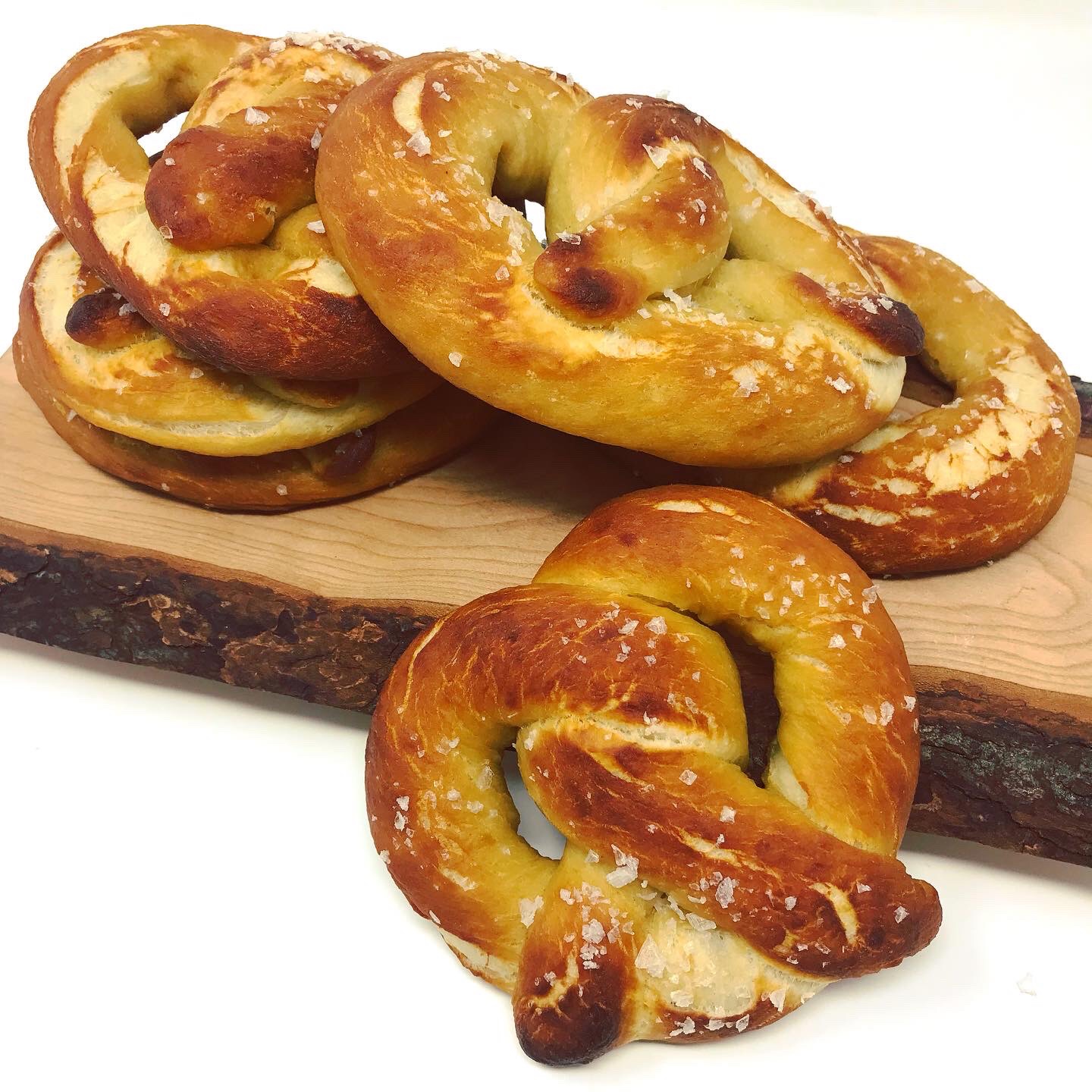
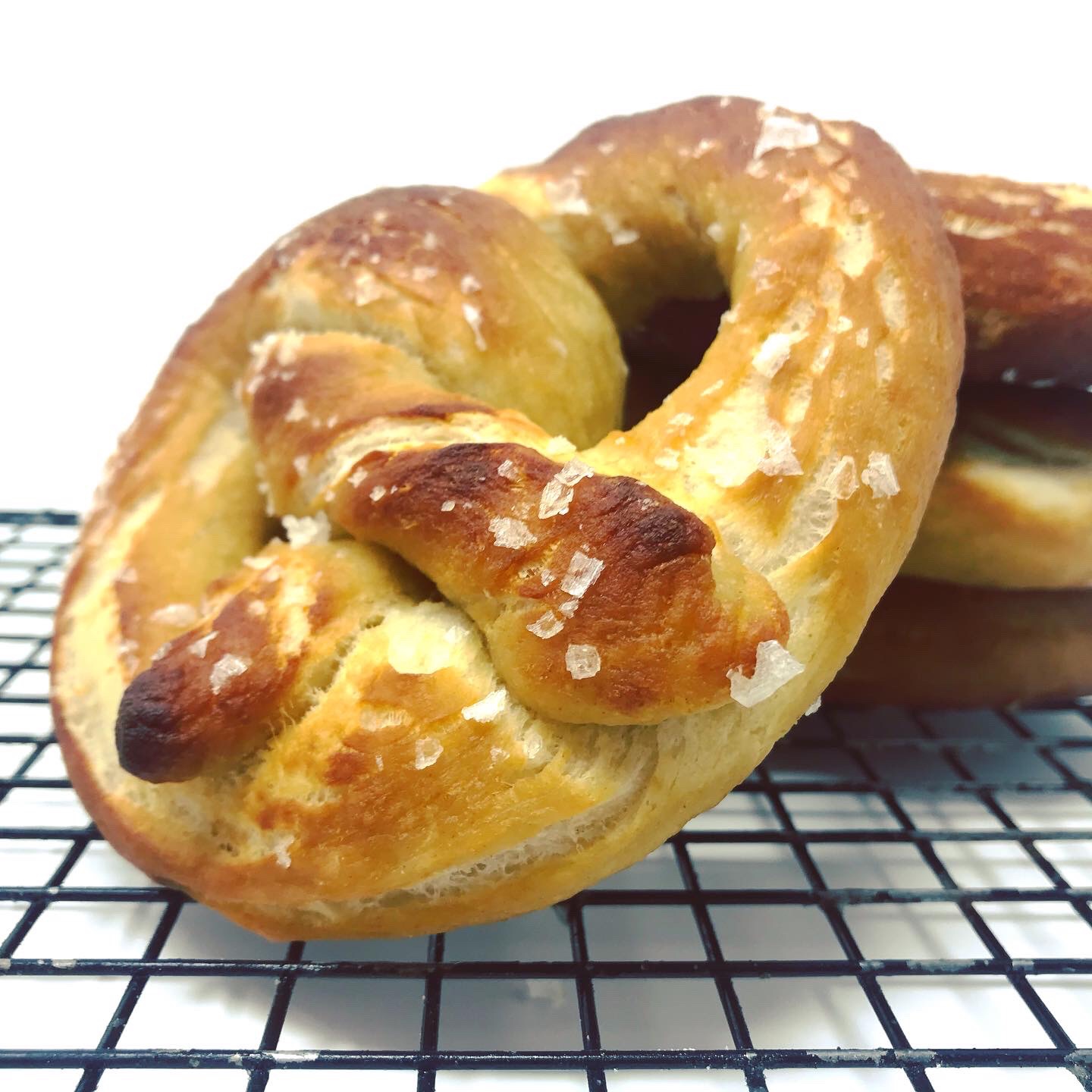
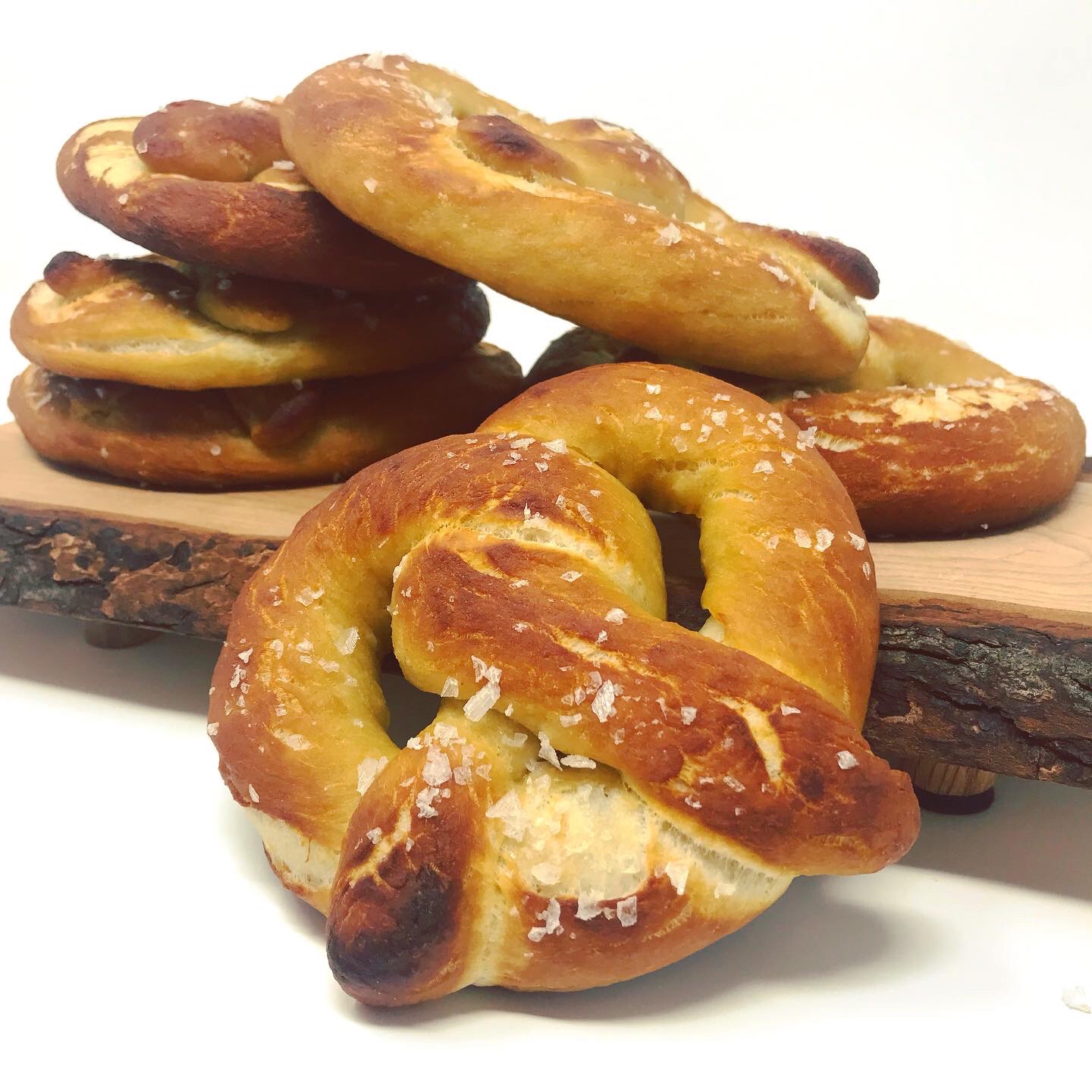
Soft Bread Pretzels

Makes: 8

Ingredients

Pretzel dough

  • 4 cups bread flour
  • 1 tablespoon kosher salt
  • 2 tablespoons soft brown sugar
  • 2 1/4 teaspoons Quick-rise yeast
  • 320ml warm water
  • 65ml olive oil

Soda Bath

  • 3 litres water, boiling
  • 1/2 cup bicarbonate of soda

To finish

  • 3 tablespoons salted butter, melted
  • Sea salt flakes

Method

  1. Lightly oil a large bowl and set aside for the dough later
  2. In the bowl of a stand mixer combine the flour, salt (to one side), yeast (to opposite side) and brown sugar
  3. Add in olive oil and 250ml warm water and mix on low setting to combine the ingredients. Add in remaining water, if needed, to achieve a soft, slightly sticky dough. Continue to knead in the machine for a total of 7 minutes. (if you’re mixing the traditional way, combine all the ingredients in a large bowl and stir using your  hand (in a claw shape) until the all come together. Tip out onto a lightly oiled surface and continue to knead for 10 mins until the dough is soft and slightly sticky)
  4. Tip the dough from the mixer bowl into the prepared oiled bowl, cover and set aside in a warm place to proof for at least 45 minutes, or until doubled in size
  5. Before you start working on the dough pieces, bring the 3 litres of water to a rolling boil in a large pot and add in the bicarbonate of soda
  6. Once the dough has finished proofing, tip out onto a lightly oiled surface. Divide the dough into 2 equal pieces and, in turn, divide each piece into 4 equal pieces. This will give you 8 equal pieces of dough to work with
  7. Roll each piece of dough into a long strand/rope approximately 30 inches in length. Take each end of the dough “rope” in the opposite hand and cross over simultaneously. Cross them over again to bring back the ends back to their original sides whilst bringing the tips down to the base of the loop. You should end up with a rough “heart” shape with the overlapping stands inside. Press the ends of the strands onto the loop so they stick
  8. Preheat your oven to 400°F
  9. This next bit is fiddly and a little patience & perseverance may be needed. Carefully pick up and drop the assembled pretzel to the pot of boiling soda solution (I use a slotted spatula) Take caution as there may be some splashing. Allow the pretzel to boil for 20 seconds (it should rise to the surface), the using a slotted spatula flip the pretzel on to it’s oppose side and continue to boil for another 20 seconds. Remove with the slotted spatula, drain and transfer to the prepared baking sheet. Repeat with remaining dough pretzels
  10. Brush each of the pretzels liberally with the melted butter and sprinkle with sea salt flakes to personal taste
  11. Bake in the your preheated oven for 10-12 minutes, until golden brown. Remove and brush with any remaining butter if desired. Transfer to a rack to cool slightly
  12. The pretzels are at their best enjoyed warm or fresh on the day of baking


Easy Pantry Recipes


I struggled for what to write here as anything I first attempted sounded flippant and vapid, making light of the situation and circumstances that each and every one of us are living through at the moment. What I wanted to do was…well to do “something“. I firmly believe in the calming and therapeutic powers of being in the kitchen. At the best of times baking for me offers a respite from daily chores and frantic everyday life, a place to get my headspace and mentally “breathe”.

My baking activity has definitely had an upsurge of late. In the uncertain circumstances of the world today I find there is a calming certainty in knowing that if I mix a certain bundle of ingredients together a known result will be achieved. Focusing on the task at hand helps to redirect my attention and anxiety away from the unnerving headlines and statistics we’re being bombarded with- a calm in the eye of the storm, no matter how briefly. I guess that’s what I’m trying to do here-  pass on these moments of calm to you in some small way. 

The recipes here offer little moments of indulgence and respite with minimal ingredients and skill needed. Hopefully most of the ingredients called for are already staples in your pantry or, failing that, will prove easy to get hold of. I hope you enjoy taking some time out and baking them.

Stay safe out there folks, see you on the other side.

You can find some further information on mental health considerations during COVID-19 Outbreak here

img_3281

Shown here served with crème anglaise

Chocolate Soufflé

Serves 4

Ingredients

• 2 cups chocolate hazelnut spread (I use Nutella – surprise!)

• 5 eggs

Method


  1. Preheat the oven to 375˚F (190˚C).
  2. Separate the egg yolks from the egg whites and place into two separate bowls
  3.  
  4. Mix the chocolate hazelnut spread into the bowl with the egg yolks
  5. In the second bowl, whisk the egg whites until stiff peaks form
  6.  
  7. Fold 1/3 of the whipped egg whites into the chocolate/egg yolk mixture until fully incorporated. Add the remaining egg whites to the mixture and fold gently, but thoroughly, until the mixture is smooth
  8. Pour the mixture into the greased ramekins and bake for 15-17 minutes until risen
  9. Serve immediately
img_3278

Shown here served with crème anglaise


img_3571

Shown here served w/ Blueberry, Rosemary & Juniper berry conserve

Soda Bread

Ingredients

  • 3 1/2 cups All Purpose flour
  • 1 teaspoon bicarbonate of soda
  • 1 teaspoon kosher salt
  • 1 1/2 cups buttermilk*

Method

  1. Preheat oven to 450°F
  2. Line a tray with baking parchment and dust lightly with flour. Set aside until needed
  3. In a large bowl combine the flour, bicarbonate of soda and salt. Whisk to combine and break down lumps. Make a well in the centre
  4. Pour in most of the buttermilk
  5. Using one hand stir the flour into the liquid from the outside of the bowl, turning the bowl as you do. Continue until the mixture comes together in a soft dough that is not too wet or sticky (you may need the remainder of the buttermilk here)
  6. Turn the dough out into a lightly floured surface and knead lightly for a few seconds. Don’t over-knead here- you just want to do it enough so that it holds it shape. Don’t do it to the extent that you would with standard bread dough!
  7. Using your hands, lightly floured, pat the dough into a round shape about 2 inches thick. Transfer to the floured baking sheet
  8. With a knife (I use a bench scraper) score a cross into the top of the loaf, so that it goes almost all the way through the thickness and over the sides of the loaf
  9. Bake in the preheated oven for 15mins then reduce the heat to 400°F and continue baking for an additional 20mins until cooked. The baked loaf will be deep golden in color and sound hollow when the bottom of it is tapped
  10. Remove and cool on a wire rack
  11. This type of loaf will cool with a hard, crispy crust. If a softer crust is desired wrap a clean kitchen towel around the hot loaf and allow it to cool

*If you don’t have buttermilk to hand you can make your own by combining 1 cup milk with 1 tablespoon squeezed lemon juice or distilled white vinegar in a jug. Stir to combine and leave to sit for 15 mins. After 15 mins the liquid will have thickened slightly and small curds can be seen. Use in the recipe as required. Any remaining milk can be stored in the fridge.

img_3568


img_3962

White Bread Bloomer

  • 4 cups bread flour
  • 2 1/2 teaspoons quick action yeast
  • 2 1/2 teaspoons kosher salt
  • 2 tablespoons granulated sugar
  • 1/4 Olive oil
  • 1 1/4cups warm water

Method

  1. Lightly oil a large bowl and set aside for the dough later
  2. In the bowl of a stand mixer combine the flour, salt (to one side), yeast (to opposite side) and brown sugar
  3. Add in olive oil and 250ml warm water and mix on low setting to combine the ingredients. Add in remaining water, if needed, to achieve a soft, slightly sticky dough. Continue to knead in the machine for a total of 7 minutes. Proceed to Step 4.(If you’re mixing the traditional way, combine all the ingredients in a large bowl and shaping you hand into a “claw shape”, with fingers slightly spaced, mix by hand until all the ingredients come together in a ball. Tip out onto a lightly oiled surface and continue to knead for 10 mins until the dough is soft and slightly sticky)
  4. Tip the dough from the mixer bowl into the prepared oiled bowl, cover with lightly oiled cling-wrap and set aside to proof for at least 45 minutes, or until doubled in size
  5. Once the dough has finished proofing, tip out onto a lightly oiled surface. Punch down the dough to knock bar the air and reduce it in size
  6. You can either leave it as one large load or divide into two for 2 smaller standard sized loafs
  7. Once the dough has been knocked back use oiled hands to shape into an oval shape and transfer to a large flour dusted baking sheet
  8. Cover with oiled cling wrap, set aside and leave to double inside for apx 30-40mins
  9. Whilst the dough is having it second proof, preheat your oven to 425°F
  10. Once the dough has proofed and risen, bake in the preheated oven for 15mins, after which reduce the temperature to 390°F and bake for further 10-15mins until deep golden in color and the base of the loaves sound hollow when tapped
  11. Remove from the oven, and allow to cool on a rack
  12. Baked loaves can easily be frozen and saved for later. Wrap in cling wrap, place in plastic bag, seal and place in freezer. Defrost for a few hours when needed

PB & J Oat Bars

Ingredients

  • 5 tablespoons salted butter, plus extra for the tin
  • 1 cup crunchy peanut butter
  • 8 tablespoons grape jelly (or favourite fruit flavour)
  • 1/2cup light brown soft sugar, packed
  • 2 cups rolled oats

Method


  1. Heat the oven to 350°F . Butter and line the base and sides of a 9” square cake tin with baking parchment
  2. Set aside 3 tablespoons each of the peanut butter and jam in separate bowls for later. Combine the remaining peanut butter, jam, butter and sugar into a pan over a medium heat and stir until everything has melted together. Quickly stir in the rolled oats, then leave to cool for 5 mins
  3. Spoon the mixture into the prepared cake tin and gently press down with a small measuring cup
  4. Dot over the reserved peanut butter and jam, then bake for 20-25 mins or until golden brown. Leave to cool completely in the tin, then turn out onto a board and cut into bars (2 x6)
  5. Bars are best kept refrigerated in a sealed container for 2-3 days


img_3992

Easy Shortbread Cookies


  • 1 cup salted butter
  • 1/2 cup icing sugar
  • 1 1/2 cups All Purpose Flour

Method

  1. Preheat oven to 275 degree
  2. In the bowl of a stand mixer (with paddle attachment) oe using an electric hand-mixer beat the butter and icing sugar together well.
  3. Slowly add in the flour (I use 1/4 cup increments) until it has all been added in. Once it all in, crank up the speed on you machine and whip it for 6 minutes. The mixture will become light and exceptionally fluffy
  4. Using a small cookie scoop (size about 1- 1/2 tablespoon) scoop the dough out onto the prepared  baking sheets
  5. Bake in the preheated oven for about 30-35 minutes until bottoms of the cookies are browned.
  6. Remove from the oven and leave to cool for a few minutes on the trays. Transfer to a rack to cool complely
  7. Baked cookies can be kept in an airtight container at room temperature for up to a week 

In the photographs shown I put a cherry on top of each prior to baking. The pre-baked cookies can be left plain or topped with whatever you like from your pantry such as chocolate chunks; nuts; candy pieces…whatever you have to hand in your pantry.

img_3993


img_3970

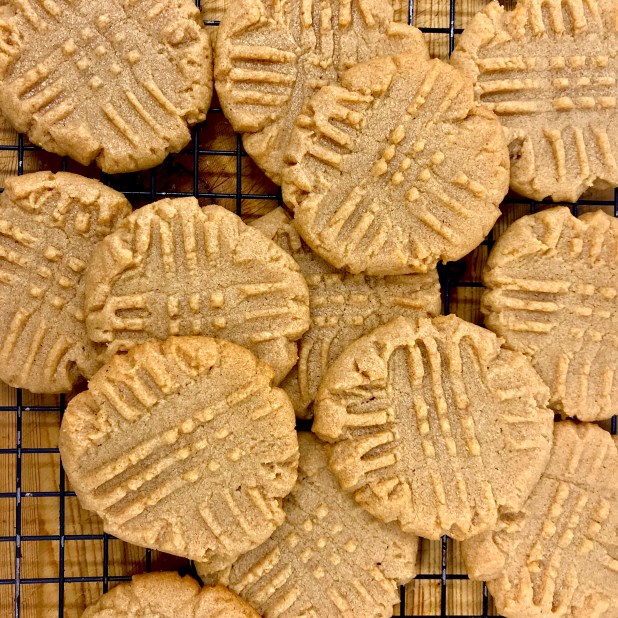
Peanut Butter Cookies

Makes 18-20

Ingredients

  • 1 cup Sugar
  • 1 cup Peanut Butter
  • 1 Egg


Method


  1. Preheat the oven to 350 degree. Line 2 cookie sheets with baking parchment
  2. In the bowl of a stand mixer, or a hand-held electric mixer, mix the ingredients together until well blended
  3. Using a small cookie scoop (about 1-1/2 tablespoon size) scoop doughballs on to ungreased cookie sheet
  4. Using a fork press down in one direction and then press again from the other side to form a criss-cross pattern on top
  5. Bake for 12 minutes
  6. Allow them cool on the cookie sheet for a couple of minutes before transferring to a wire rack to cool completely
  7. Baked cookies will keep for 3-4 days at room temperature in a sealed container

img_3964


Homemade Butter

I posted the recipe for this a couple of years ago. It such an easy thing to do but a lot of people think of it as a daunting task. You can find the recipe/method here