Coming to a small screen soon

If you follow any of my social media channels you will know by now that I’ll be a competitor on an upcoming baking reality TV show. If you don’t follow them and just happened to stumble upon this page, well the show in question is Food Network Canada’s “Great Chocolate Showdown“. Premiering on Tuesday, March 1st at 9pm ET/PT the show features 10 highly skilled home bakers from all walks of life.

Great Chocolate Showdown is an ooey-gooey, decadent chocolate dessert competition series where 10 home bakers go head-to-head in the indulgent world of chocolate, vying for the grand prize in a range of creative and exciting chocolate-based challenges. In order to survive the competition from week-to-week and avoid elimination, the chocoholic dessert-makers must dazzle our panel of world-renowned chocolatiers and food expert judges with their delicious, inventive creations. In the end, three bakers take on the biggest chocolate challenge of their lives, but only one is crowned ‘Great Chocolate Showdown Champion’ and wins the $50,000 grand prize

During the course of the competition I’m hoping to deliver some amazing bakes, cakes and sweets while staying through to my flair for flavors, all the while competing for the grand prize of $50k. Hopefully you’ll get to tune in, watch along and route for me.

Great Chocolate Showdown, Season 3 premieres March 1 at 9 p.m. ET/PT on Food Network Canada and is available to stream live and on-demand with STACKTV and the Global TV App.

New episodes air Tuesdays at 9 p.m. ET/PT on Food Network Canada and are available to stream live and on-demand with STACKTV and the Global TV App.

You can follow ME, if you don’t already, at my accounts below

Instagram: https://www.instagram.com/crumbsinmybeardyyz/

Twitter: https://twitter.com/MrMomsYYZ

TikTok: https://www.tiktok.com/@crumbsinmybeardyyz?lang=en

You can follow Food Network Canada, Great Chocolate Showdown and all it’s happenings at the accounts below

Facebook: https://www.facebook.com/foodnetworkcanada

Twitter: https://twitter.com/foodnetworkca

Instagram: https://www.instagram.com/foodnetworkca

TikTok: https://www.tiktok.com/@foodnetworkca?lang=en

#GreatChocolate Showdown

Online: See exclusive content at www.foodnetwork.ca

For the official press release see here

That’s all for now. Stay tuned!

Toronto’s only contender for Great Chocolate Showdown Season 3 #greatchocolateshowdown

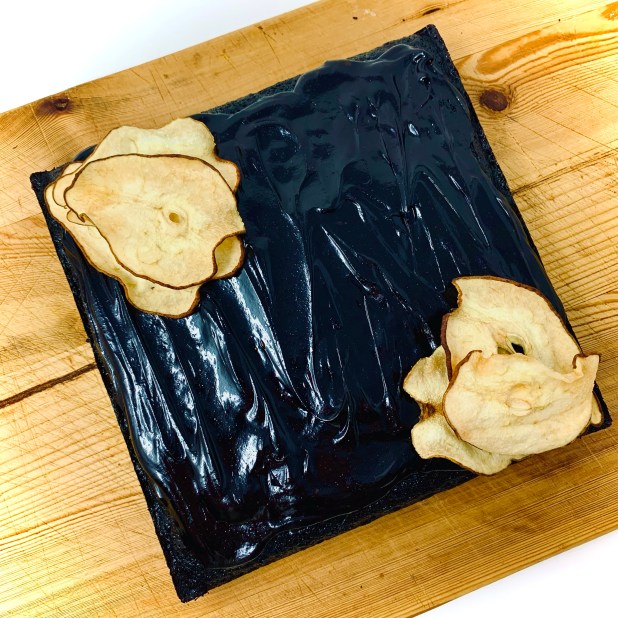
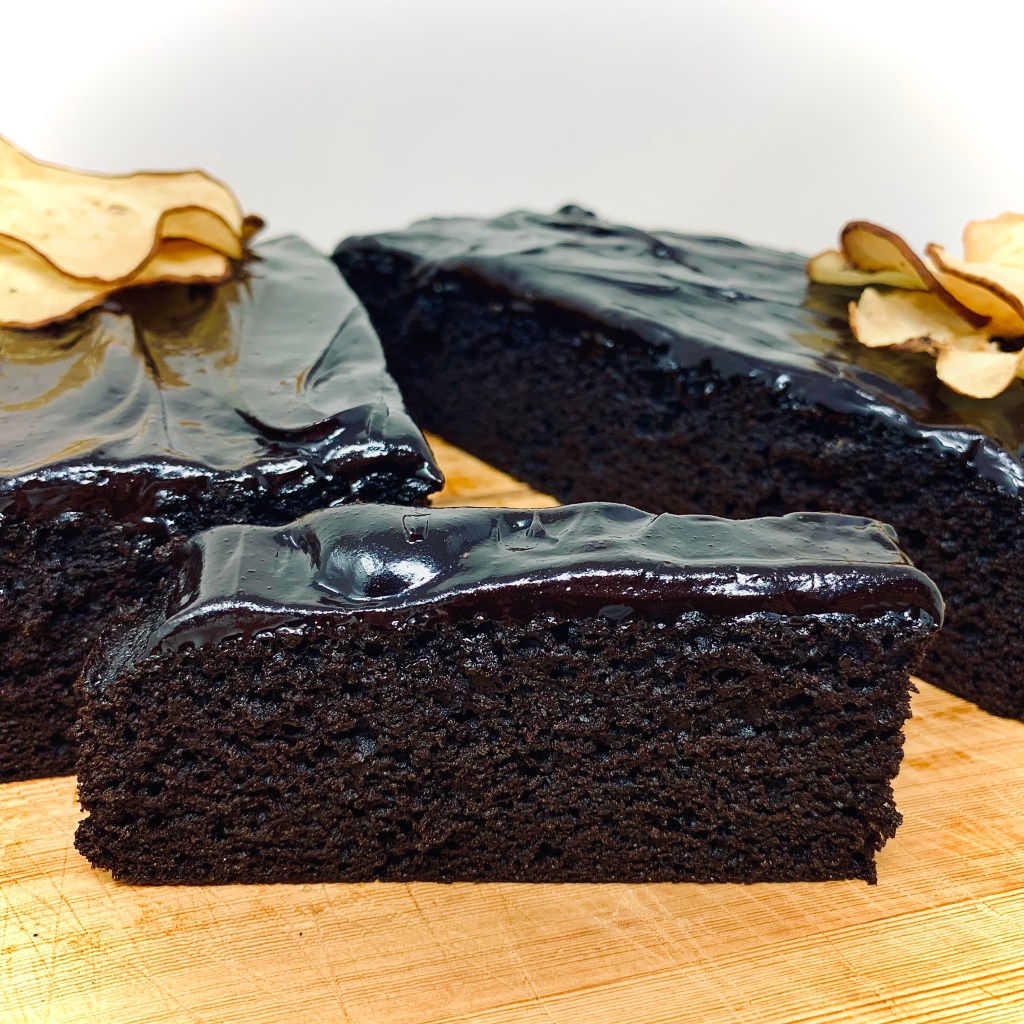
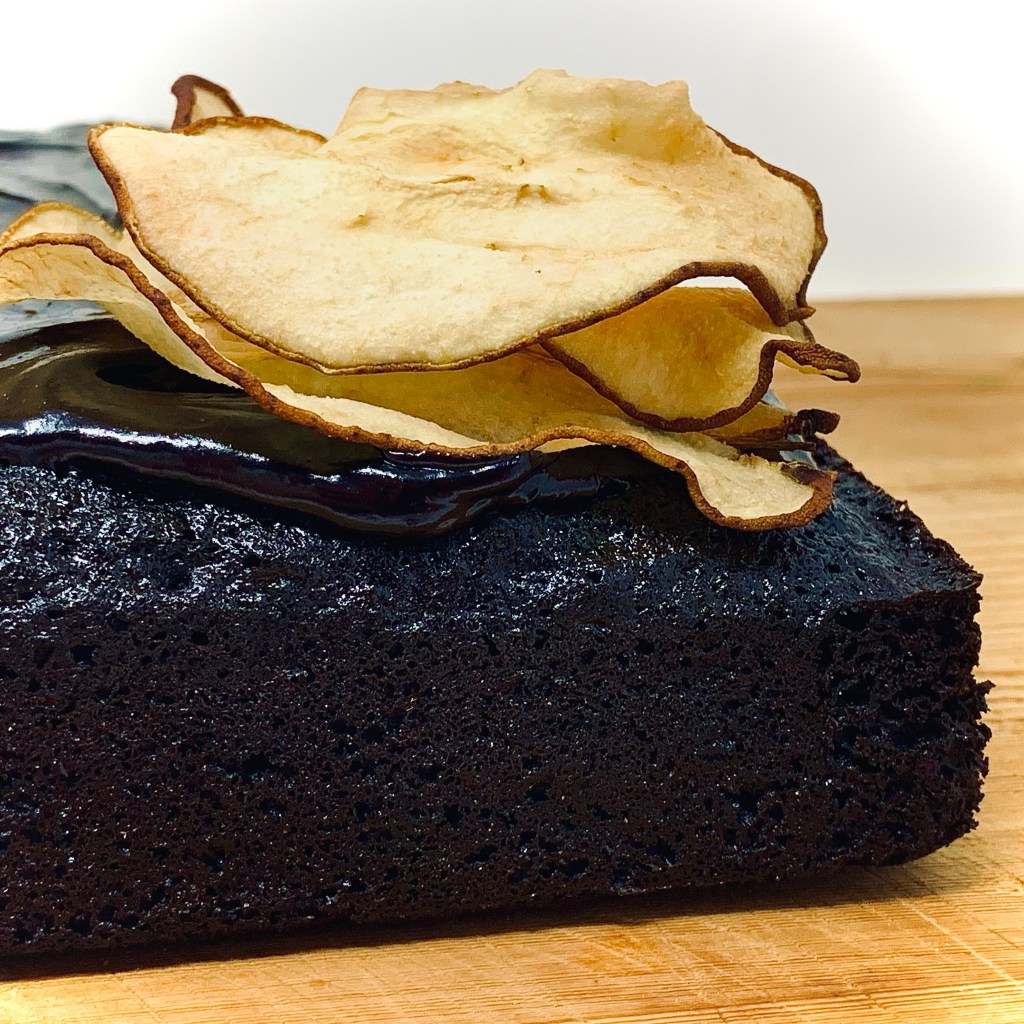
Midnight Ginger Cake

So this started as riff on my Spiced Chocolate Cake and grew from there. I absolutely love those chocolate-covered ginger biscuits. You know the ones – those crunchy, brittle ginger-snap like ones that have that slow-burning throaty heat, enrobed in decadent dark chocolate? Yup- I can easily demolish an questionably inhuman amount of them in one sitting! So I thought of recreating that addictive marriage of heat and bitterness in cake form. Not content with just any form if chocolate flavor I wanted an extra oomph! Switching up to using black cocoa not only gives in my view wonderfully deep, earthy chocolate flavor but also the alluring sumptuous midnight-black of the title. Although it does provide a chocolate flavor, it’s a world away from the sometimes cloying richness of a traditional cocoa-fueled cake.

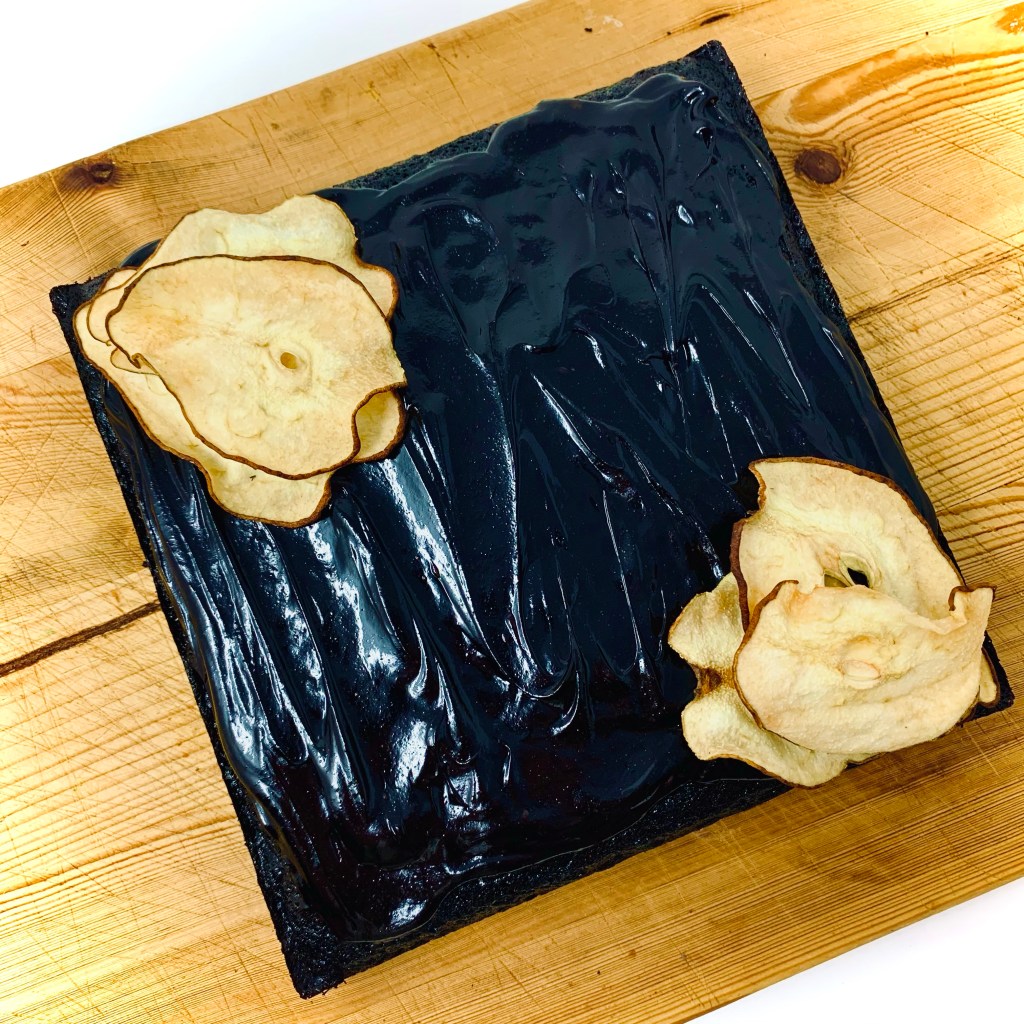
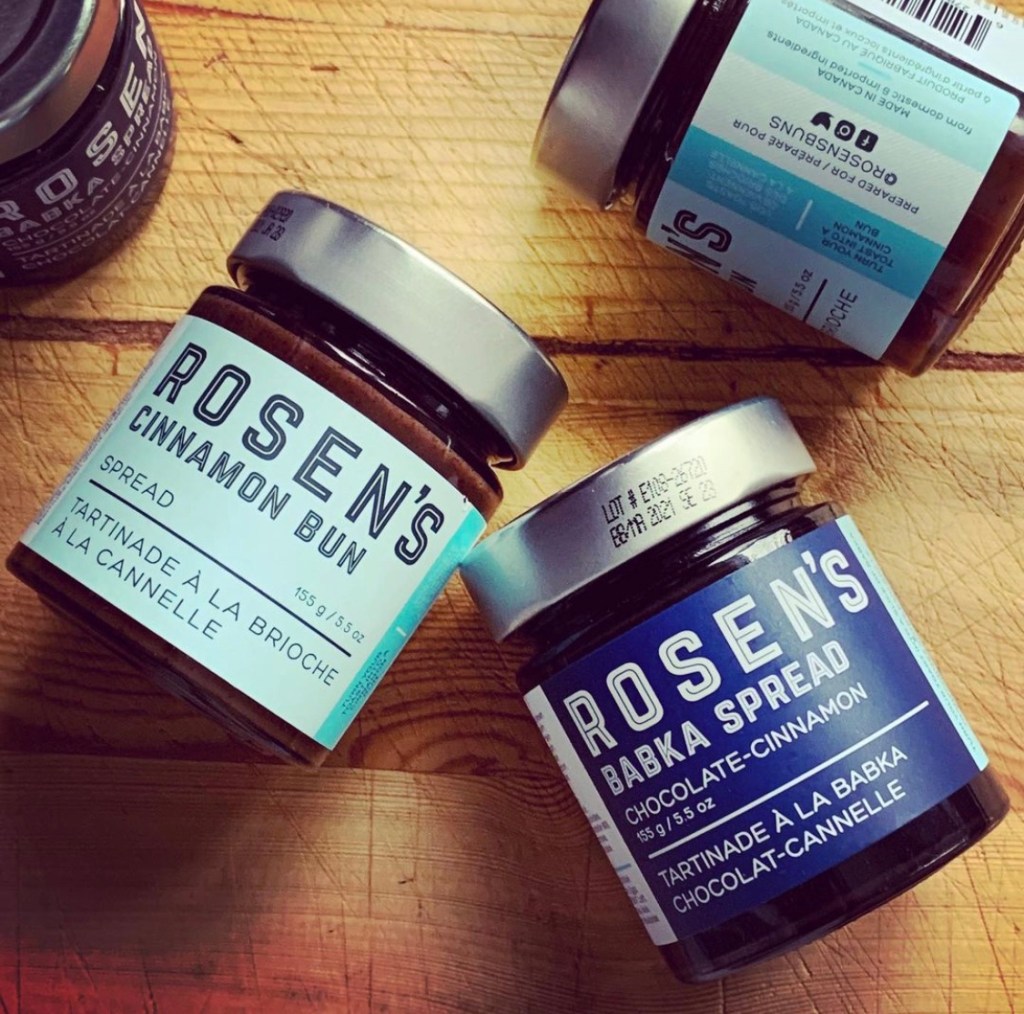
I also thought it would provide the perfect canvas for my newly acquired stock of Rosen Bun’s bun-inspired spreads– here, the deliciously addictive Babka variety, with it’s “deep chocolate flavor with a cinnamon left hook”. The darkly, luxurious flavors of the spread combining with the spicy, gingery antics of the cake. You can rest easy as using the spread here is nothing more complicated than spreading, or rather smearing, it in hypnotic, glossy waves of velvety, sweet goodness over the top of the cooled cake. In fact the hardest part is restraining yourself from scoffing the cinnamony-cocoa spread straight from the jar! Seriously – this is sinfully finger-licking good stuff. Check out the Rosen Buns website for a list of stockists.

Decoration of the finished covered cake is entirely to your own taste. I used dehydrated pear slices as I was experimenting with a newly purchased kitchen gadget. Using the dried pear slices as decoration rather than munching them straight out of the bag providing some form of self-deluding restraint in my mind!

As always with my posts where I mention, or name drop, specific items it’s done from a place of support and elevation. The producing companies are small, local Toronto businesses whose products have earned a special place in this cynical, hungry heart (and I mean LITERALLY). If there has been any compensation, sponsorship or re-imbursement, I’ll clearly flag it up for clarity and yes, it usually still involves me being head-over-heels with the product (case in point here, with the awesome team at Station Cold Brew Coffee).

I hope you enjoy this little exercise and experiment in flavors from me- who knows there may be more to come! In the meantime stay safe, stay home (and bake!) and mask up!

Ingredients

  • 1 cup all-purpose flour
  • 1/2 cup black cocoa powder
  • 3/4 tsp baking soda
  • 1/4 tsp salt
  • 3 tsps ground ginger
  • 1 tsp ground cinnamon
  • 1/4 tsp ground cloves
  • 1/2 cup Canola oil
  • 1/2 cup fancy molasses
  • 1/4 cup orange juice
  • 3/4 cup dark brown sugar
  • 2 eggs
  • 1/2 tsp vanilla extract
  • 1/4 cup whole milk
  • 1 jar Rosen’s Babka Spread

Method

  1. Combine the oil, molasses, juice and sugar in a small saucepan. Set it on low heat and stir till the sugar has dissolved. Set aside to cool for about 10 minutes
  2. In a bowl combine the flour, cocoa, baking soda, salt and spices. Whisk to combine and set aside until needed
  3. Preheat your oven to 325 degrees F. Grease an 8″ x 8″ square cake pan with oil and line it with baking parchment, allowing allow the edges to overhang for easy removal
  4. Transfer the cooled molasses mixture to a large mixing bowl and add in the eggs, vanilla and milk. Whisk well until smooth and well combined
  5. Fold in the flour mixture gradually into the liquid until incorporated. Make sure the there are no pockets of dried flour mixture. The final batter may look a little lumpy- this is okay
  6. Pour the batter into the prepared tin, level the top and bake for 35 to 40 minutes until a toothpick inserted into the center comes out clean. If the top is darkening quickly, cover the tin loosely with foil and continue baking
  7. Allow the cake to cool in the tin for 15 minutes, then invert, remove and place on a wire rack to cool completely.
  8. Once completely cool spread the babka spread over the top as you would a ganache. Decorate as you like. Here I’ve used some dehydrated pear slices (for no other reason than I was playing with a new piece of kitchen equipment!)
  9. Slice and enjoy!
  10. Store in an airtight container for about 3-4 days at room temperature

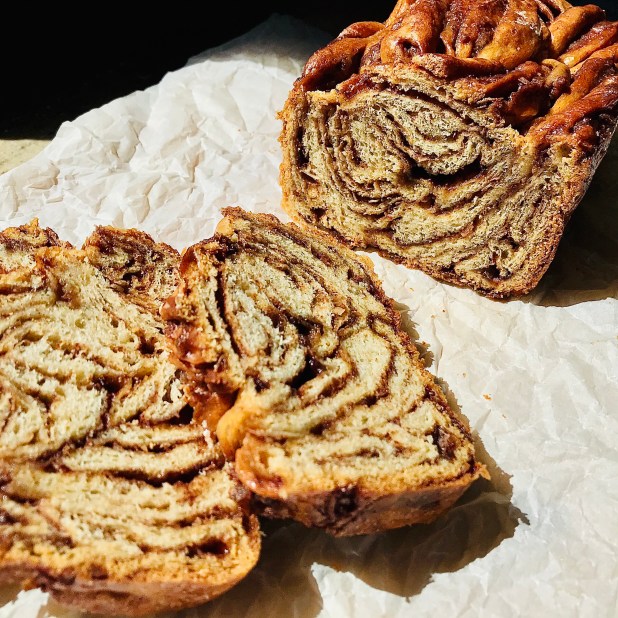
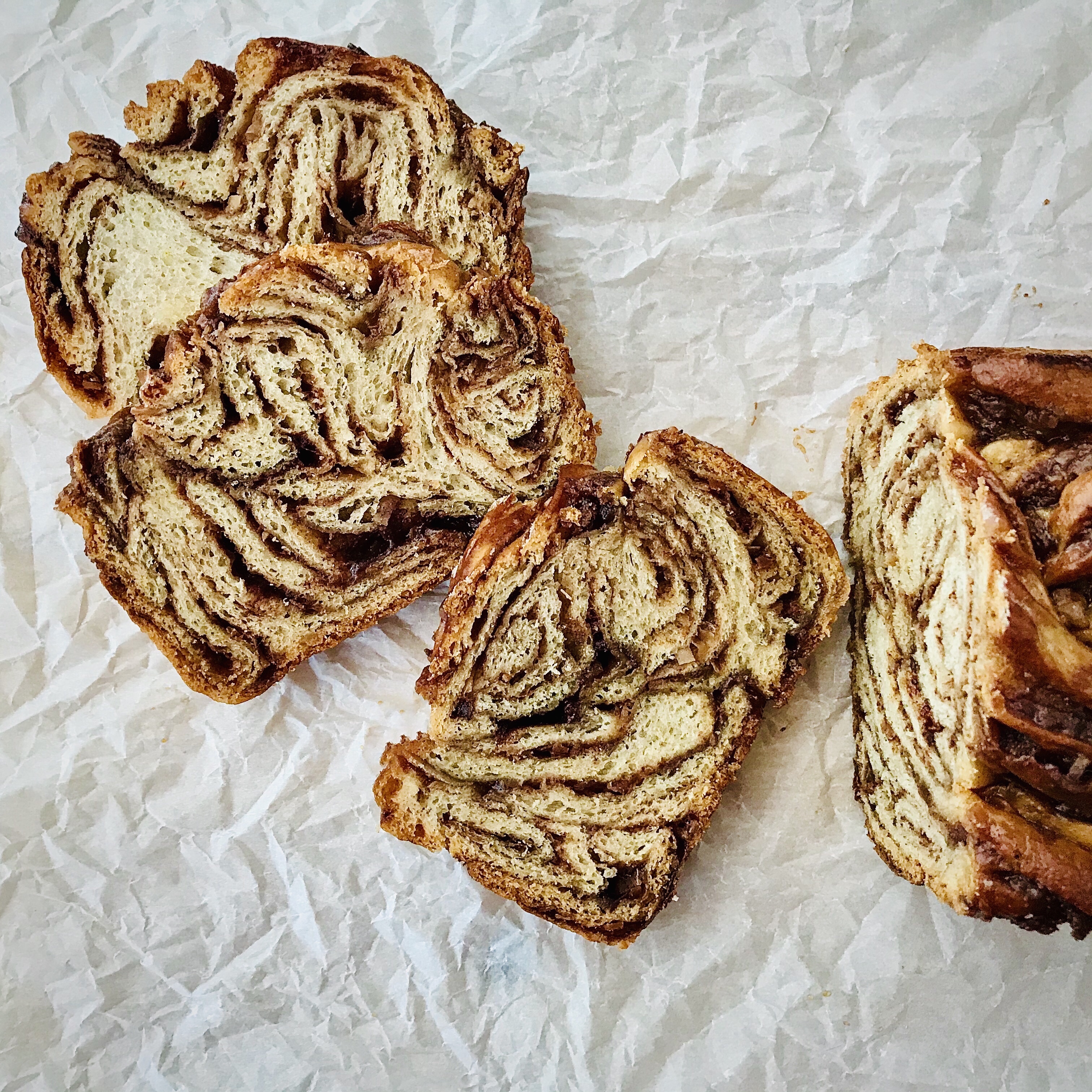
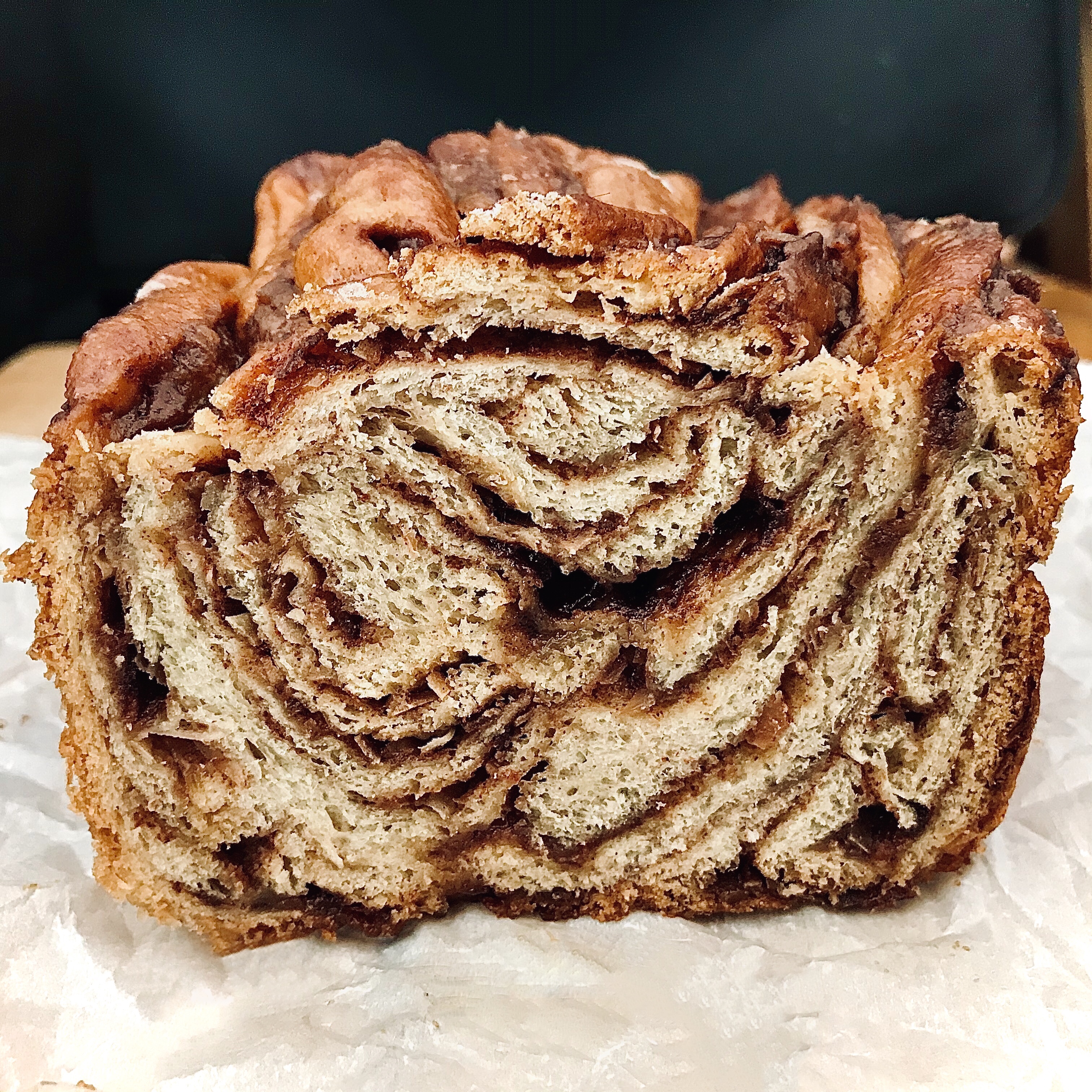
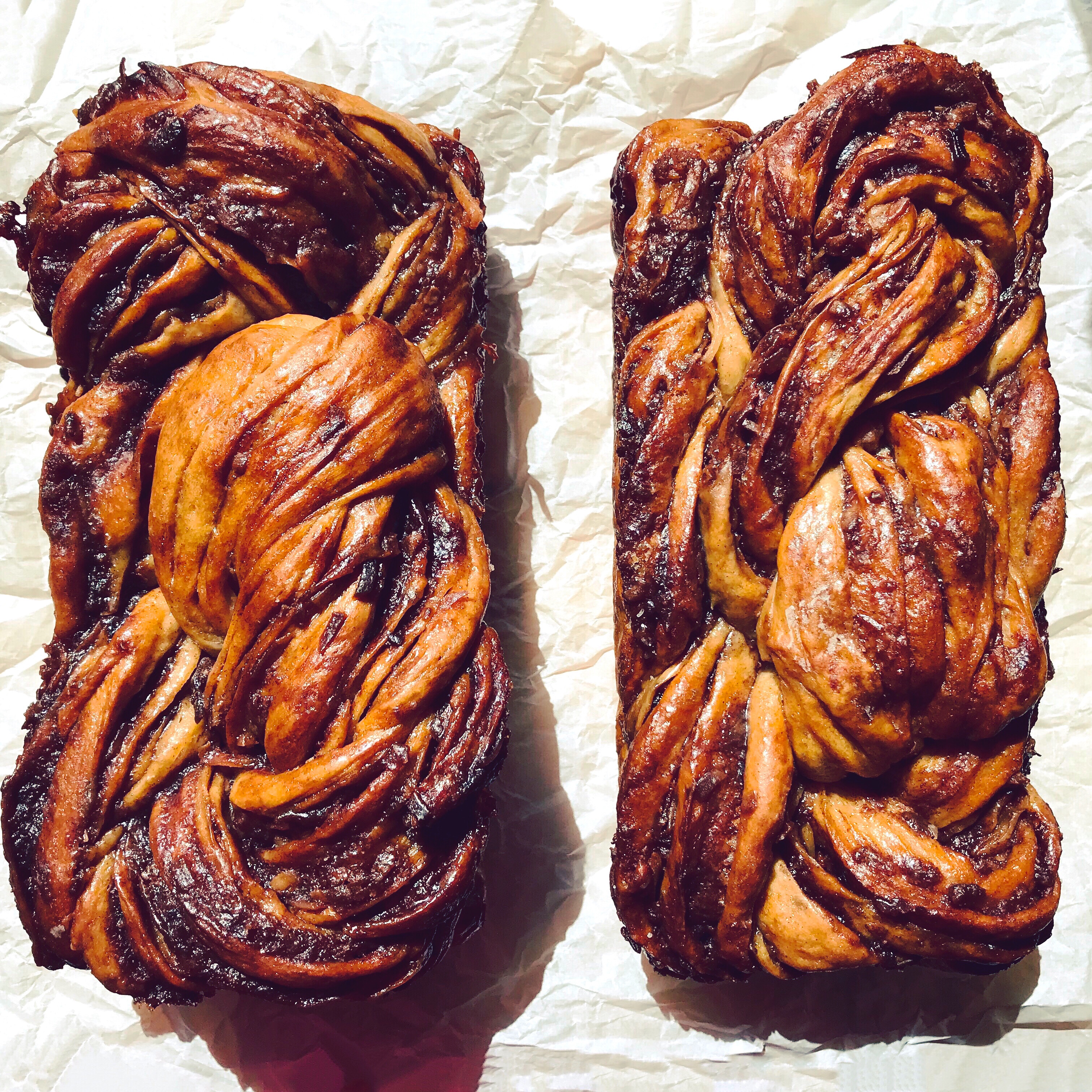
Cinnamon & Toasted Coconut “Babka”

img_8293

Covid quarantine has been interesting to say the least. Amongst everything else the lighter side of things including apocalyptical shortages of toilet tissue; mind-numbing cabin fever and Netflix binges galore to say the least. But it’s the baking I’ll remember. Never in any pandemic themed movie was there a world where the protagonist’s quest revolved around that of All Purpose flour and yeast. CV-19 triggered peoples’ inner baking gusto. Was it the yearning for self-sufficiency in an uncertain world, or perhaps that solace of creative therapy? Everyone has their own answer no doubt. What I do  know is that never have my social media feeds been so alive with breads and bakes from domestic kitchen alchemists. Sourdoughs, scones and banana bread. Oh- the plethora of banana breads! 101 ways with that familiar speckley brown fruit. But another baked bread that’s been quietly enjoying a renaissance is the Babka.

This one’s been on my ‘To Do’ list for a while. Surely I’m not the only one who finds something hypnotic about the ripples, folds and swirls of the this loaf. And so multi-purpose too! Stuck for breakfast? Lightly toast a slice as a perfect crispy-edged morsel with your coffee. Last minute dessert needed? Gently oven warm and top with a scoop of French vanilla ice cream, and melt into the sublime comforting gooeyness.

There appears to be much debate about which is best, and dependent on which part of which city you live in who’s is best. Whether it’s to be chocolate filled, or cinnamon laden; sweet or savory. Just like the layers in a babka the opinions are many and varied. I will freely admit to using the term “babka” here in air quotes. Whilst it might have to multi-layered look of the traditional Jewish bread I use my go-to recipe for enriched dough which usually forms the basis of my cinnamon bun recipe. Whilst it’s not a laminated dough, in the sense of croissant structure, it is more akin to a couronne with layered structure twisted and on show.

I feel it only right to give a quick, but hopefully respectful, snapshot history on the baked loaf. The loaf’s name itself is in reference to it’s root’s in the Jewish communities of Eastern Europe- “babka” meaning “little grandmother” in Ukranian, Russian, and Eastern European Yiddish. It’s told that on Shabbat, grandmothers would twist leftover scraps of challah bread with seeds and nuts, forming something not that dissimilar, if a little less sweet, to the babka we know today. With the influx of Eastern European Jews to the United States, especially New York, sweeter fillings were introduced. Chocolate, for instance, was much more obtainable and was included in the bake making the babka closer to the sweet treat we know of today.

Whilst traditionally there seems to be a preference for topping the loaves with a sweet streusel topping I opted here for the lesser known alternative of a simple syrup glaze in order to have those wonderful braid-induced swirls on show. I’ve added toasted coconut to the traditional cinnamon paste filling to add an extra layer to the caramel tones of the paste whilst appealing to my penchant for all things “coconuty”. The recipe here is ample for two loaves- one for immediate scoffing and the other is ideal to pop in the freezer for later date. Simply thaw at room temperature until defrosted to enjoy!

Ingredients

For the simple syrup glaze

  • 1/2 cup fine sugar
  • 1/2 cup water

For the dough and filling

  • 1 cup milk
  • 3/4 stick salted butter
  • 2 1/4 tspns active yeast
  • 1 tspn sugar
  • 1/4 cup lukewarm/ tepid water
  • 4 cups AP flour
  • 1/2 tspn kosher salt
  • 1 tspn ground cinnamon

For the filling

  • 1 cup shredded coconut
  • 1 cup dark brown sugar, packed
  • 1 stick salted butter, softened
  • 3 Tbspns ground cinnamon
  • 2 Tbspns maple syrup

img_8294

Method

To make the simple syrup

  1. Combine the sugar and water in a small saucepan
  2. Bring to the boil over a medium high heat, until the sugar is dissolved
  3. Remove the pan from the heat and allow the syrup to cool fully

To make the dough

  1. In a jug combine the yeast, sugar and warm water. Stir and set aside for 10 minutes until foaming
  2. Gently heat together the milk and butter over a medium heat until the butter has fully melted. Remove from heat and set aside to cool until lukewarm
  3. In a pan over a medium heat, toast the shredded coconut until golden brown and fragrant. Set aside until needed
  4. In the bowl of a stand mixer with bread hook attached, combine the AP flour, salt, and cinnamon. Once the yeast mixture has foamed up nicely, tip it on, along with  the cooled butter/ milk mixture. Set your mixer to knead for between 6-7 minutes until it comes together in a single ball and has cleaned the bowl
  5. Remove the dough from the mixer bowl, place in an oiled large bowl, cover and leave to rise until at least doubled in size
  6. Whilst the dough is rising you can make the filling. In a bowl combine the softened butter, brown sugar, ground cinnamon, and maple syrup. Stir these together until well combined
  7. Line 2 loaf pans with baking parchment, up and over the sides
  8. Divide the dough in half and set one piece aside. Knock back the first piece of dough and shape into a rectangle, approximately 12″ x 18″
  9. Spread half of the cinnamon paste over the flattened, shaped dough. Once you have this done, then sprinkle half of the toasted shredded coconut over the paste covered surface.
  10. Roll up the dough, along the long side, until fully rolled into a swiss/ jelly roll shape. Using a sharp knife or bench scraper, slice the roll, lengthwise, down the middle to expose layers of filling. Pinch together the twp halves at one end and carefully, keeping the exposed filling layer side on top twist together, overlapping into one long “tentacle” shape. Pop one end of the tentacle into the lined loaf pan and arrange the remainder of it, folding it back on itself, so that it fills the pan. It doesn’t have to be too neatly done as this adds to the overall look of the baked babka
  11. Cover with oiled clingwrap, set aside and repeat with the second batch of dough to fill the second loaf tin. Cover as the first and set both aside to proof for a further 45 mins
  12. Near the end of the proofing time, preheat your oven to 350 degrees F
  13. Once proofed after 45 mins, remove the cling wrap and bake in the middle shelf of your oven for 25mins. After 25mins rotate the tins front to back and bake for an additional 25mins or until the middle of the babka loaves have an internal temperature of 185 degrees F. (If you notice the top of your loaves becoming excessively brown you can tent them with some aluminium foil)
  14. Once your loaves are fully baked, remove from the oven and straight away brush with the cooled simple syrup. Continue until you have used up all the syrup on the loaves. Allow the loaves to cool in their tins before removing
  15. The baked babka loaves are best eaten within a couple of days. They can be stored for 2 days in an airtight container. They also freeze really well. Tightly wrap in baking parchment, then cling wrap and finally aluminium foil. To defrost, remove from freezer and allow to come to room temperature for slicing and serving

8b0b83f1-988d-40fe-98b8-be9223598507

Chester Bread (aka Gur Cake)

img_7744

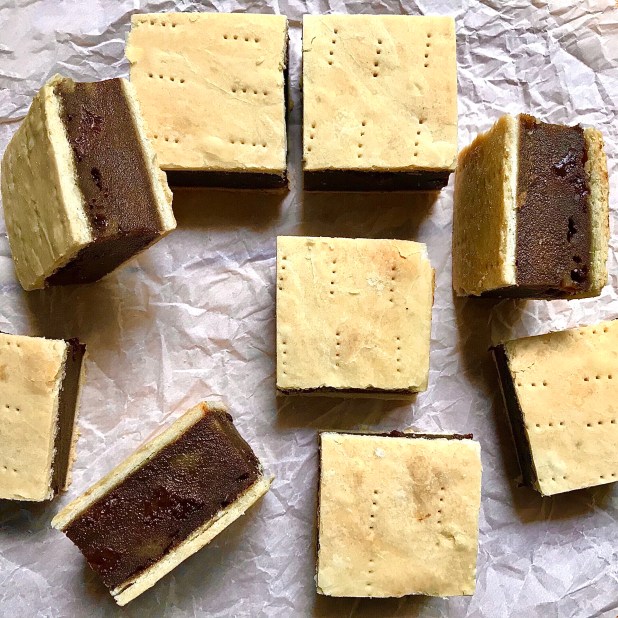
If you’ve followed my recipe blog for some time you’ll have no doubt have noticed that my childhood has various landmarks in the form of baked goods- Soda bread; Cheesecake; Queen of Puddings. This is yet another one of those anchor points with which nostalgia comes crashing in waves.

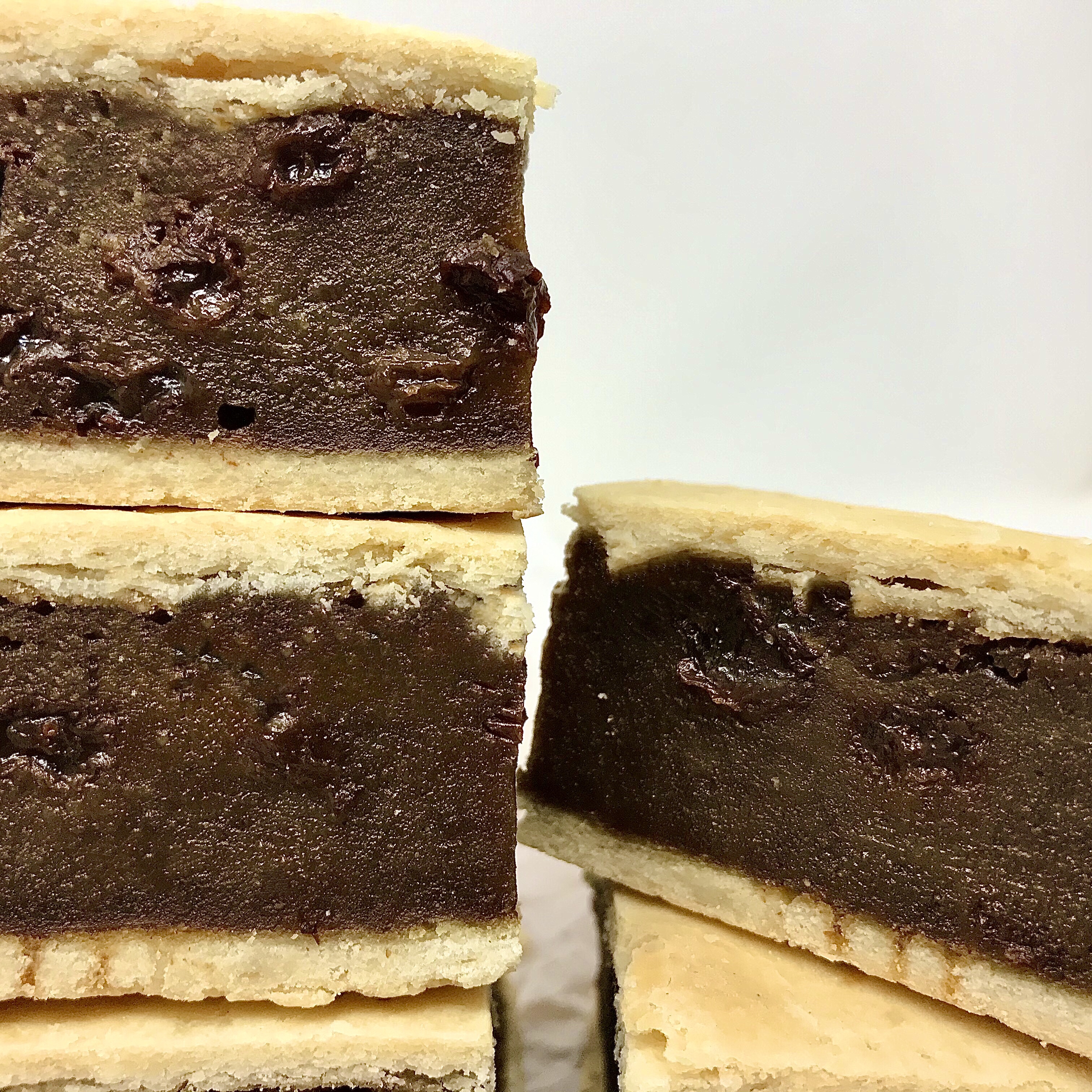
Known by various names including Gur Cake; Chester Slice; Donkey’s Gudge, it was Chester Bread that I knew this by growing up in South-East Ireland. Many an early adolescent afternoon was spent munching on these en route to my childhood home from school- oblivious to not only the background the baked treat I clutched but also ignorant to dubious history of where I was buying them from. My only preoccupation was how could something so delicious be so cheap!

At the bottom of the hill to my school was a building known simply to us as “The Good Shepherds”. All I knew of it, at the time, was that it was a convent and former orphanage. The expression “If you don’t behave I’ll take ya to The Good Shepherds” was frustratingly hissed by many a Waterford parent to the offspring, uttered in ominous overtones akin to summoning The Boogey Man. A fuller investigation later in life revealed the title of the building to be The Good Shepherd Magdalene Asylum (Laundry) and Orphanage, Without going in to it in too much detail it was one of number of locations of a religious order whose ethos and modus operandi was of a particularly sordid and horrific nature.  A sordid blemish on the hem of Ireland’s pious petticoat. Google it if your’re intreest has been piqued- but consider yourself forewarned.

The main institute had ceased operation in 1982, however there were still some occupant nuns in residence and as a means of charitable support income they ran a small bakery onsite. It was here that myself and many another transient school-goer would purchase our after-school sugar rush. Chester breads; Vanilla Slices (a more rustic version of Mille-feuille with pastry, vanilla custard filling and water icing topping) and cream doughnuts (think Long John doughnuts filled with jam and cream) were all greedily snapped up to the point of selling out.

Whilst they all would bear mentioning, as nostalgia renders them supremely tasty, it’s Chester Bread that brings us here today. I’ve already mentioned that this bake is known throughout Ireland under various monikers such was its popularity. Originally used in the 19th century as a novel, but nonetheless innovative, method to use up stale offcuts and surplus bakes in bakeries, the cake was inexpensive to make using a basic recipe template of filler, binder and sweetener. The finished bakes were then sold cheaply (but not so cheap as to not yield a profit) to youngsters playing truant from school as something to fill the gap until dinner. In Ireland, particularly Dublin, such kids were called “gurriers” who would “mitch”, “mooch” or just generally bunk off school. Hence the ‘Gur Cake” name. I have yet to unearth the link as to why it’s called ‘Chester Bread” where I grew up when that name is apparently derived from it’s place of origin in Chester in the United Kingdom. As for the ‘Donkey’s Gudge” version? I don’t know what a donkey has to do with it, let alone what their gudge is! Feel free to comment should you be able to shed some light here.

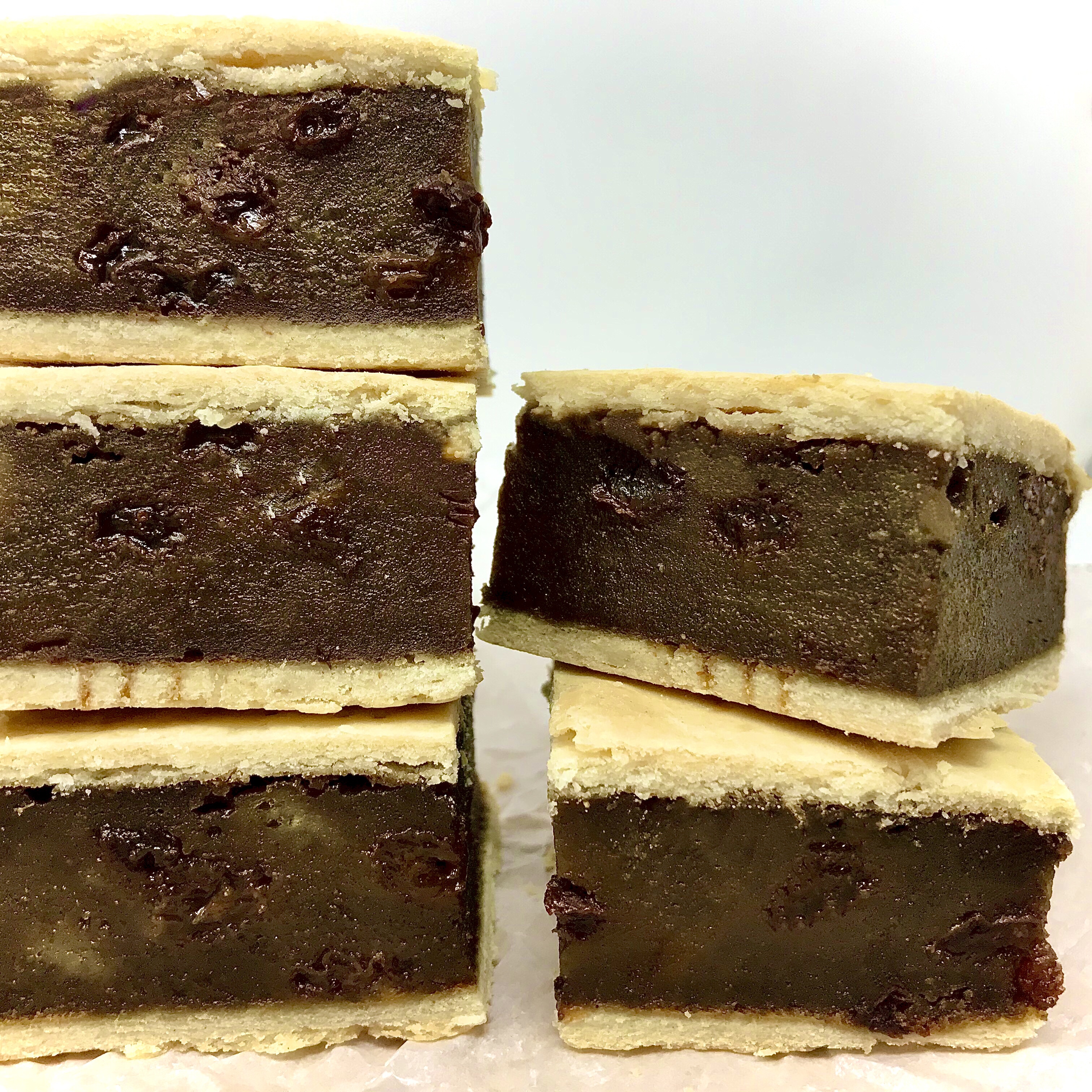
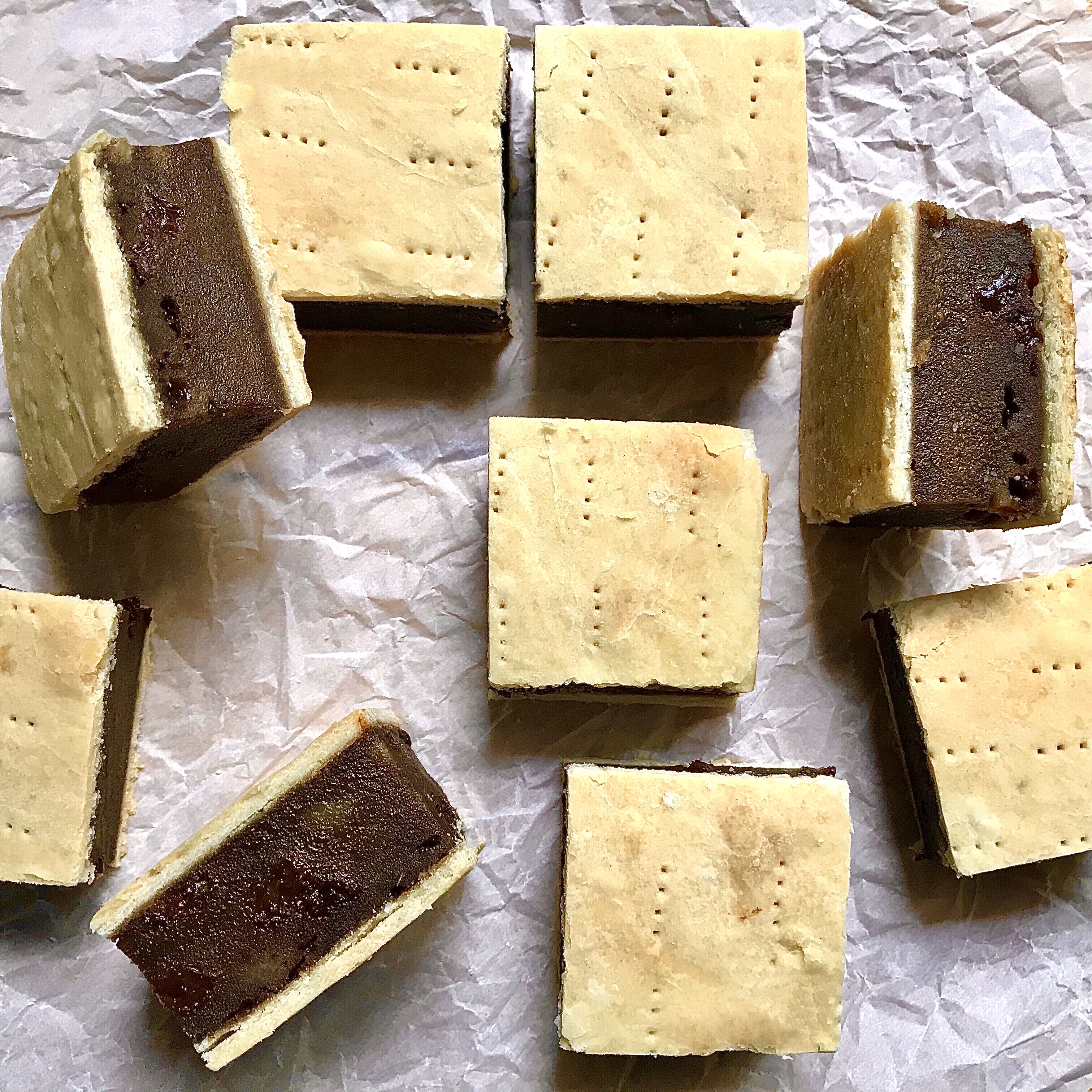
Whatever way you call it, I find that the finished bake is definitely memorable. What starts as simple stale bread is baked to a fudgy, slightly gelatinous, sweetly spiced filling. It’s almost like a dense ginger cake. I’m sure the pastry serves as nothing more than a utilitarian purpose to allow the filling to be handled with minimal mess. Try it out and see what you think. It’s an ideal accompaniment to a cup of tea- perhaps whilst researching The Magdalene Laundries?

Ingredients

Shortcrust pastry

  • 2 1/2 cups All purpose flour
  • 3/4 cup Butter, cold and diced
  • 1/4 tspn salt
  • 3 tbspn ice cold water
  • Flour, for dusting

Filling

  • 15 Slices of bread, at least 1 day old
  • 1 1/2 cups Cold strong tea (preferably Irish)
  • 1 cup, packed Brown sugar
  • 2 tbspns Mixed spice
  • 1 tspn Baking powder
  • 1/2 cup All purpose flour
  • 1/4 cup Salted butter, cut into pieces
  • 1 cup Raisins
  • 2 tbspn Treacle
  • Icing or fine sugar for dusting, optional
img_7752

Method

To make shortcrust pastry

  1. Combine the flour and salt into a bowl, coarsely rub in the butter/margarine. Continue to rub together until you have the texture of coarse meal. Some pea-sized granules of butter may remain
  2. Sprinkle over the water  and bring the ingredients together to make a soft dough. Additional water may be needed depending on your kitchen’s temperature/ humidity
  3. Lightly knead to bring it together in a ball. Flatten to a disc, wrap in cling wrap and refrigerate until needed

*Pastry is best chilled before rolling.

To make filling

  1. Preheat your oven to 375°F
  2. Grease and line a 9′ x 9′ tin (2″ high)
  3. Remove the crusts from the slices of bread and lie in a shallow casserole or baking dish.
  4. Pour over the cold tea and leave to soak for 1 hr
  5. After the hour, drain of any excess tea and using a fork mash the wet bread to thick pulp
  6. In a large bowl combine the flour, baking powder, sugar and mixed spice, stirring well to combine
  7. Rub in the cold diced butter until you have something that resembles coarse meal in texture (similar to making the pastry above)
  8. Add the bread mixture and treacle to the other flour/ sugar/ spice mixture and stir well to combine

To assemble

  1. Remove the pastry from the fridge and divide into 2
  2. Roll one 1/2 of the pastry large enough to fit your baking tin and use to line the bottom of it. Prick the pastry all over with a fork or knife
  3. Pour and spread the bread mixture over this pastry layer
  4. Roll the remaining pastry to fit the top of the tin and place over the filling, pressing to form a lid. Again prick the second layer of pastry all over with a fork or knife (helpful hint: I roll to size and prick BEFORE placing the pastry lid on to the filling. This stops the pastry being pushed down into the soft filling mixture)
  5. Bake in your preheated oven for 1 hr, after which remove and let to cool completely in the tin. The finished bake should have firmed up considerably but still have a slight wobble. Dust with sugar if using.
  6. Once fully cooled, cut into squares (using this tin I usually divide into 4 x 4)
  • The finished Chester bread can be dusted with sugar or left plain if preferred
  • Baked Chester bread can be stored in an airtight container at room temperature for up to 4 days
img_7746


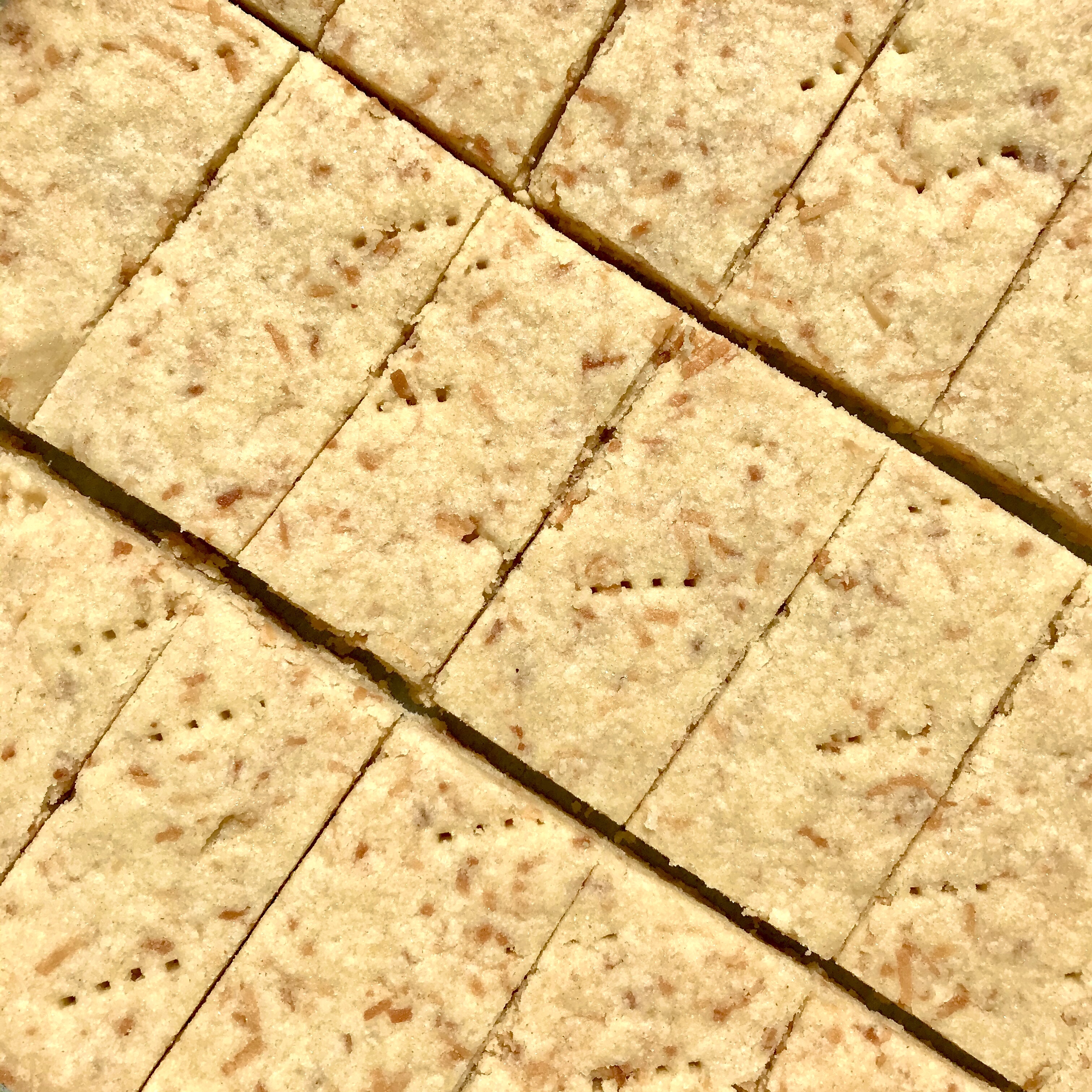
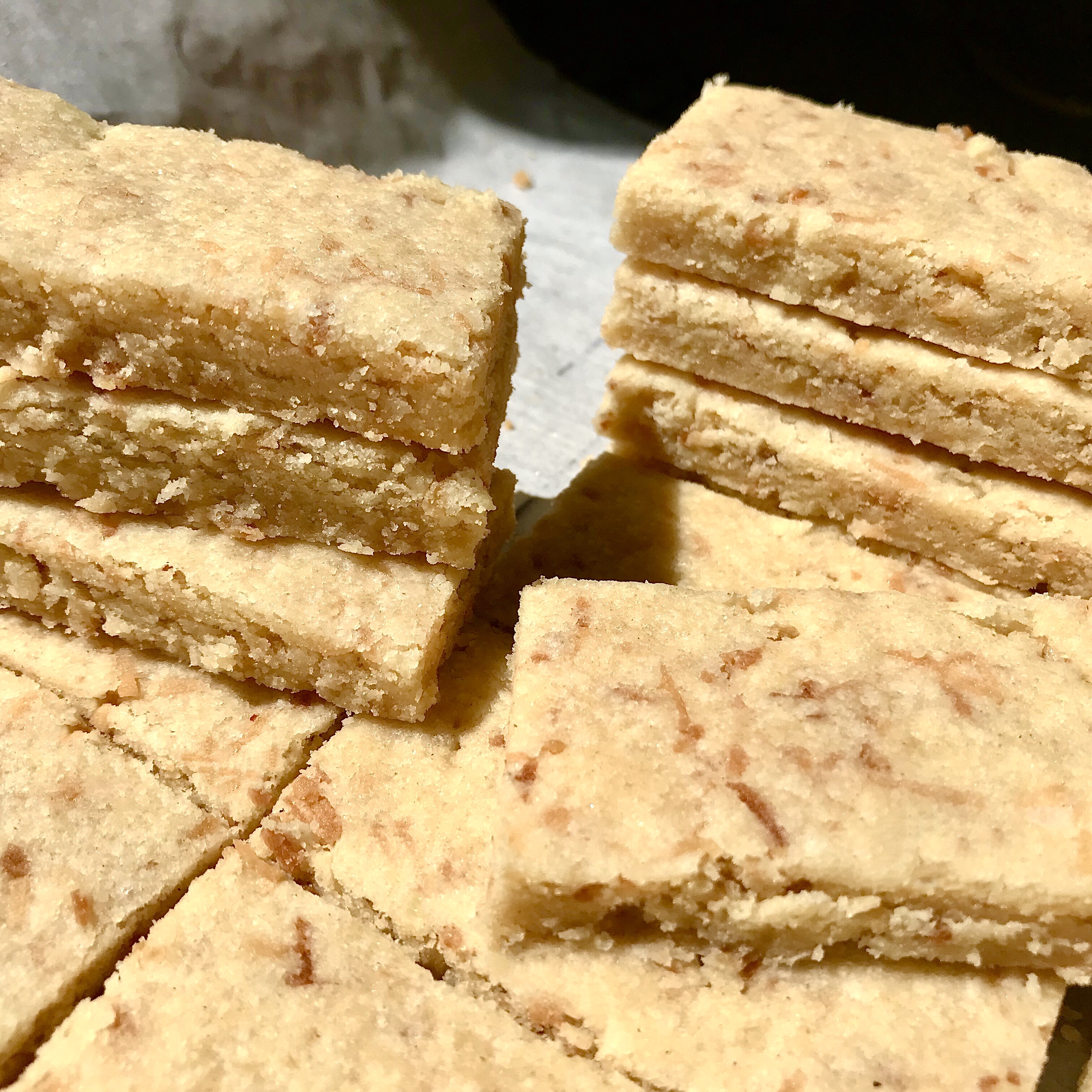
Golden Coconut Shortbread

a9fe5f0b-2a7a-4a1d-931f-4ebf3156ab5f

Shortbread is the stuff of legend in our house. Having a family that is Scottish means they’re well qualified to judge what falls in the parameters of acceptability. A fussy bunch they are and rightly so. Many a commercial highland cookie has fallen for being “too crumbly”, “not buttery enough” or “too damp” to name a few of criticisms. So I set about experimenting to find that correct combination of ingredients that would yield a shortbread that crumbly enough with falling to pieces; buttery enough would feeling too greasy or damp in your mouth and crisp enough to yield enough with a satisfying snap. In the words of everyone’s favourite flaxen haired domestic critic, “Just right”.

The historic recipe for shortbread hails from Scotland and in it’s basic form is one part sugar; two parts butter and 3 parts plain flour. Time and tide has, like many an ancestral recipe, meant that the original recipe has been tweaked and adjusted with many families input and alterations.

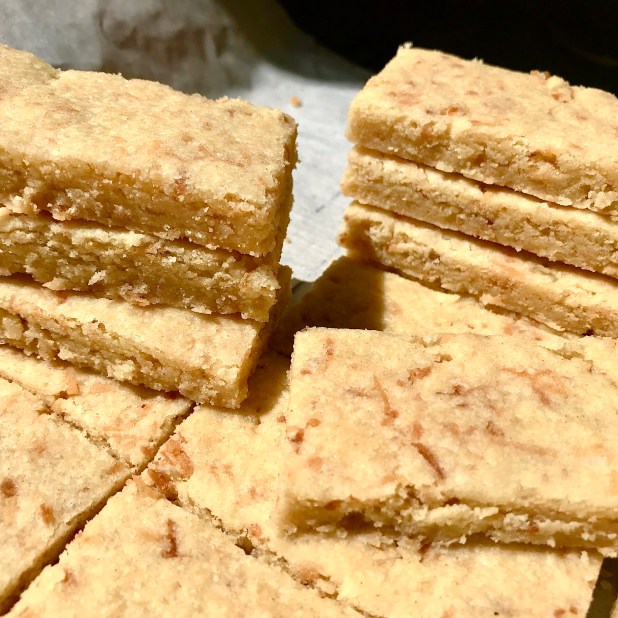
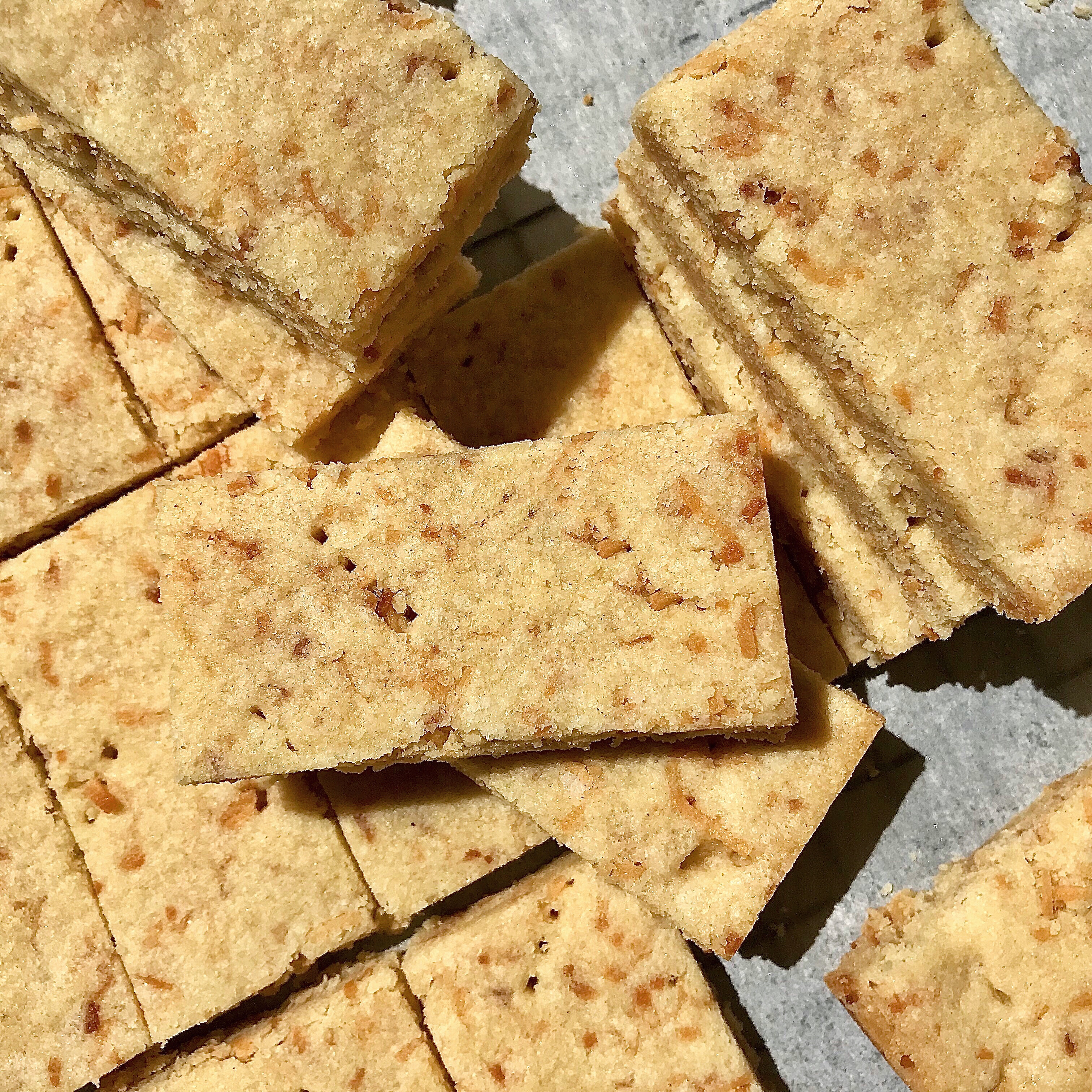
My recipe here has been tweaked from an original from my mom. I found the additions of the more unusual dry ingredient of semolina, rice flour and cornstarch increase the more desirable textures of crispness and crumbliness without marring the buttery taste. The inclusion of the ancient grain flour of Red Fife was purely a whimsical  addition as I was exploring baking with differing flour types at the time. It adds a subtle nutty flavor to the finished shortbread cookie that works really well with the signature butteriness of the cookie. And the toasted coconut? Well who doesn’t like toasted coconut?

img_6492

Ingredients

  • 1 cup shredded coconut
  • 1 cup AP Flour
  • 2/3 cup Red Fife flour
  • 1/3 Semolina
  • 2 Tablespoons Rice Flour
  • 1 1/2 Tablespoons Cornstarch
  • 1/2 cup and 2 tablespoons fine sugar, divided
  • 1/2 Teaspoon Kosher salt
  • 1 cup/ 2 sticks salted butter, cold and cubed

Method

  1. Lightly grease and line a 9″ x 12″ traybake tin
  2. In a pan over a medium heat toast the shredded coconut until fragrant and lightly browned. Remove from heat and set aside until needed
  3. In a large bowl combine the flour, semolina, rice flour, cornstarch, sugar and salt. Whisk together to further combine
  4. Add in the cubed butter and rub together with your fingertips until the mixture is just beginning to bind together. Every so often do a  quarter turn of the bowl to make sure you’re using all the dry mixture. You’ll want a texture somewhere between breadcrumbs and damp sand before you stop. Be wary of overworking the butter into the mixture – you want to avoid a dough that is feels slimey from the butter melting too much into the dry ingredients
  5. Tip in the toasted coconut and lightly rub in with your fingers until combined
  6. Tip the crumb mixture into your prepared tin and press the dough so that it forms a solid layer. Level the surface with the back of a spoon or measuring cup, making sure the mixture is evenly spread and uniform. Prick all over with a fork
  7. With a knife or pizza cutter score the shortbread into 24 rectangular pieces (2 cuts by 7 cuts) taking care not to actually cut the full way through
  8. Refrigerate for 30 mins minimum
  9. Preheat your oven to 325°F
  10. Remove the shortbread from the fridge and bake for about 35 minutes or until a very pale golden brown.
  11. Remove from the oven and cut fully through the baked shortbread with a knife or pizza cutter at the score lines you previously made
  12. Sprinkle with remaining 2 tablespoons of fine sugar and leave to cool in the tin for 15 minutes. Carefully lift the fingers out of the tin with a palette knife or the parchment paper overhang and finish cooling on a wire rack
  13. Store in an airtight tin for up to a week

img_6494